
Adderall Withdrawal: 24/7 Detox for High Risk Cases

No medication cures Adderall withdrawal. Treatment means managing symptoms as they surface, using evidence-based therapy to address the addiction underneath, and choosing a supervised setting when depression, suicidal thoughts, or co-occurring mental illness raise the risk. If you’re having thoughts of suicide or signs of psychosis, that’s an emergency, not a symptom to ride out at home.
TL;DR:
- Long-term high-dose Adderall use and co-occurring mental health conditions increase withdrawal severity and complicate treatment plans.
- There are no approved medications specifically for stimulant withdrawal; symptom management relies on therapy, antidepressants, sleep aids, and careful monitoring.
- Severe withdrawal symptoms like suicidal thoughts, psychosis, or cardiovascular issues require immediate emergency care, not home management.
- Tapering under medical supervision is safer than abrupt cessation, especially for high-risk individuals or those with unstable living situations.
- Long-term recovery depends heavily on comprehensive aftercare, including therapy, peer support, and addressing underlying mental health issues.
Table of Contents
- What Adderall Withdrawal Feels Like and How Long It Lasts
- Medical Treatment Options and How Doctors Manage Symptoms
- Behavioral Therapy and Long-Term Support After Detox
- Tapering vs. Stopping Cold: Choosing the Right Detox Setting
- Self-Care Strategies That Actually Ease Withdrawal
- When Adderall Withdrawal Becomes a Medical Emergency
- Why Medically Supervised Care Beats Willpower Alone
- How Connected Recovery Supports Safe Detox and Lasting Recovery
- Sources
What Adderall Withdrawal Feels Like and How Long It Lasts
The crash hits fast because Adderall works fast. Once the stimulant clears your system, dopamine and norepinephrine levels drop below baseline, and your brain has to relearn how to function without the boost. That gap between “on the drug” and “back to normal” is where withdrawal happens.
Psychological symptoms tend to dominate the experience:
- Depression, sometimes severe enough to include suicidal thinking
- Anhedonia, or a flattened inability to feel pleasure in things you used to enjoy
- Anxiety and irritability
- Intense drug cravings
- Difficulty concentrating, which is often what drove someone to Adderall in the first place
Physical symptoms show up too, including the fatigue that can feel bone-deep, though they’re usually less dramatic:
- Fatigue that can feel bone-deep
- Hypersomnia, or sleeping far more than usual
- Increased appetite
- Body aches and headaches
- Slowed movement and reaction time
Timing follows a fairly predictable arc, though it shifts based on dose history and individual chemistry. Symptoms typically begin within 24 to 48 hours of the last dose, peak somewhere in days three through seven, and start easing by the second week. Most people see real improvement by weeks two through four. A subset of people, though, deal with protracted withdrawal, sometimes called post-acute withdrawal syndrome, where mood swings, sleep trouble, and cognitive fog linger for months.
Severity isn’t random. Long-term high-dose use hits harder than a short prescription run. Co-occurring depression, anxiety, or ADHD makes the crash steeper. And mixing Adderall with alcohol, benzodiazepines, or other substances almost always intensifies and complicates the picture.
Medical Treatment Options and How Doctors Manage Symptoms
Here’s the honest answer that a lot of people don’t want to hear: there’s no approved medication that reverses or shortens amphetamine withdrawal. Clinical reviews looking specifically at amphetamine withdrawal treatment haven’t found a drug that reliably fixes the underlying problem. What doctors do instead is target the symptoms that are causing the most damage.
Statistic check: No FDA-approved medication exists specifically for stimulant withdrawal, which is why every credible treatment plan leans on symptom management and behavioral care rather than a pill that “cures” it.
In practice, that symptom-targeted approach can include:
- Antidepressants for depression that persists past the first couple of weeks
- Trazodone or other low-abuse-potential options for insomnia, chosen specifically because they don’t carry the same misuse risk as benzodiazepines
- Short-term, carefully monitored anxiolytics in cases of severe anxiety, used sparingly given their own dependence potential
- Modafinil, used off-label in some clinical settings for fatigue and concentration issues, though evidence here remains limited
Co-occurring disorders get treated aggressively, not as an afterthought. Someone withdrawing from Adderall who also has untreated depression or anxiety faces a much higher relapse risk if that second condition goes unaddressed. Medication in this context is a bridge, not a destination. It buys stability while therapy does the real work, and every prescription needs monitoring for side effects and, given the population, potential misuse.
Behavioral Therapy and Long-Term Support After Detox
Medication manages symptoms. Therapy changes the trajectory. Cognitive behavioral therapy helps people identify the thought patterns and situations that drive Adderall use, then builds concrete coping skills to replace it. Someone who used Adderall to power through work deadlines needs a new strategy for those deadlines, not just willpower.
Contingency management adds something CBT doesn’t: tangible rewards for verified drug-free periods. It sounds almost too simple, but it has real evidence behind it for stimulant use disorders specifically, and it works because it gives the brain an immediate, positive reinforcement loop to compete with the pull of the drug.
Aftercare determines whether early progress holds. That typically includes:
- Intensive outpatient programs (IOP) for structured support without full residential commitment
- Ongoing individual or group outpatient therapy
- Peer support groups
- ADHD coaching, when the underlying reason for Adderall use was legitimate attention difficulty
Pro Tip: If ADHD symptoms return once the stimulant clears your system, don’t assume you’re “back to needing Adderall.” Talk to a prescriber about non-stimulant ADHD medications or behavioral strategies before restarting anything with abuse potential.
Treating co-occurring mental illness during this window, not after, is what separates people who stay in recovery from people who cycle back.
Tapering vs. Stopping Cold: Choosing the Right Detox Setting
Stopping Adderall abruptly forces your brain to absorb a sudden neurochemical shock, and that shock is often what makes crashes so severe. A structured taper managed by a prescriber softens that drop, sometimes through gradual dose reduction, sometimes by temporarily switching between extended-release and immediate-release formulations to allow smaller, more precise cuts.
Where that taper happens should match your actual risk level, not just convenience.
- Home taper with prescriber oversight. Works for people with milder dependence, no active suicidal ideation, and a stable, supportive home environment. Requires regular check-ins with a doctor and someone at home who can flag warning signs.
- Outpatient monitoring. A step-up in structure. Regular visits let a clinician track mood and vitals without requiring the person to stay overnight anywhere, suited to moderate dependence with manageable psychiatric risk.
- Medically supervised inpatient or residential detox. Provides 24/7 medical supervision, which matters enormously for people with severe dependence, active depression or suicidal thoughts, polysubstance use, or an unstable living situation where continued access to the drug is likely.
The deciding factors are severity of use, presence of co-occurring psychiatric conditions, suicide risk, and whether the home environment supports or undermines recovery. When more than one of those factors points toward “high risk,” supervised care stops being optional caution and becomes the safer default.
Self-Care Strategies That Actually Ease Withdrawal
Sleep is usually the first thing to fall apart, and fixing it does more heavy lifting than people expect. Keep a consistent sleep and wake time even when hypersomnia makes you want to sleep all day, cut screens an hour before bed, and keep the room dark and cool. If insomnia persists past a week or two despite good habits, that’s worth flagging to a prescriber for a short-term sleep aid.

Nutrition and hydration matter more during withdrawal than most people realize, since appetite suppression from Adderall use often reverses hard, leaving people either ravenous or nauseated. Regular meals and electrolyte-rich fluids help stabilize energy. Light exercise, even a daily walk, has a measurable effect on mood and stress during periods like this.
Concentration will be rough for weeks. Break tasks into short chunks, use written checklists instead of relying on memory, and don’t schedule anything demanding for the first week if you can avoid it.
Pro Tip: Tell one specific person your daily check-in plan before withdrawal starts. Vague statements like “let me know if you need anything” rarely translate into action when someone is depressed and unmotivated. A scheduled daily text works better than an open offer.
When Adderall Withdrawal Becomes a Medical Emergency
Most withdrawal is uncomfortable but survivable at home or through outpatient support. Some signs mean stop waiting and get help immediately:
- Suicidal thoughts or a plan to self-harm
- Signs of psychosis, including paranoia or hallucinations
- Chest pain, irregular heartbeat, or other severe cardiovascular symptoms
- Inability to care for basic needs like eating, drinking, or personal safety
Statistic check: Because medically supervised detox measurably lowers relapse and self-harm risk compared with unsupervised withdrawal, any red flag on this list is a reason to call 911 or the 988 Suicide & Crisis Lifeline rather than wait it out. When you reach a clinician or ER, state clearly what you took, your last dose, and how long ago you stopped.
Why Medically Supervised Care Beats Willpower Alone
The conventional advice on stimulant withdrawal still leans too hard on grit: taper down, tough out the crash, wait for the fog to lift. That advice works fine for someone with a short prescription history and a stable life. It fails the person with years of high-dose use, an untreated mood disorder, and a living situation where the drug is one phone call away.
What the evidence actually supports is matching the setting to the risk, not defaulting to the cheapest or easiest option. A home taper under a prescriber’s eye is legitimate for lower-risk cases. But once suicidal thoughts, psychosis risk, or a co-occurring disorder enter the picture, supervised detox stops being an upgrade and becomes the responsible baseline.
The most underestimated piece of this whole process is aftercare. Detox gets someone stable. It doesn’t touch the reasons they started using in the first place. Skip the therapy and support-group phase, and relapse odds climb fast within months.
— Jim
How Connected Recovery Supports Safe Detox and Lasting Recovery
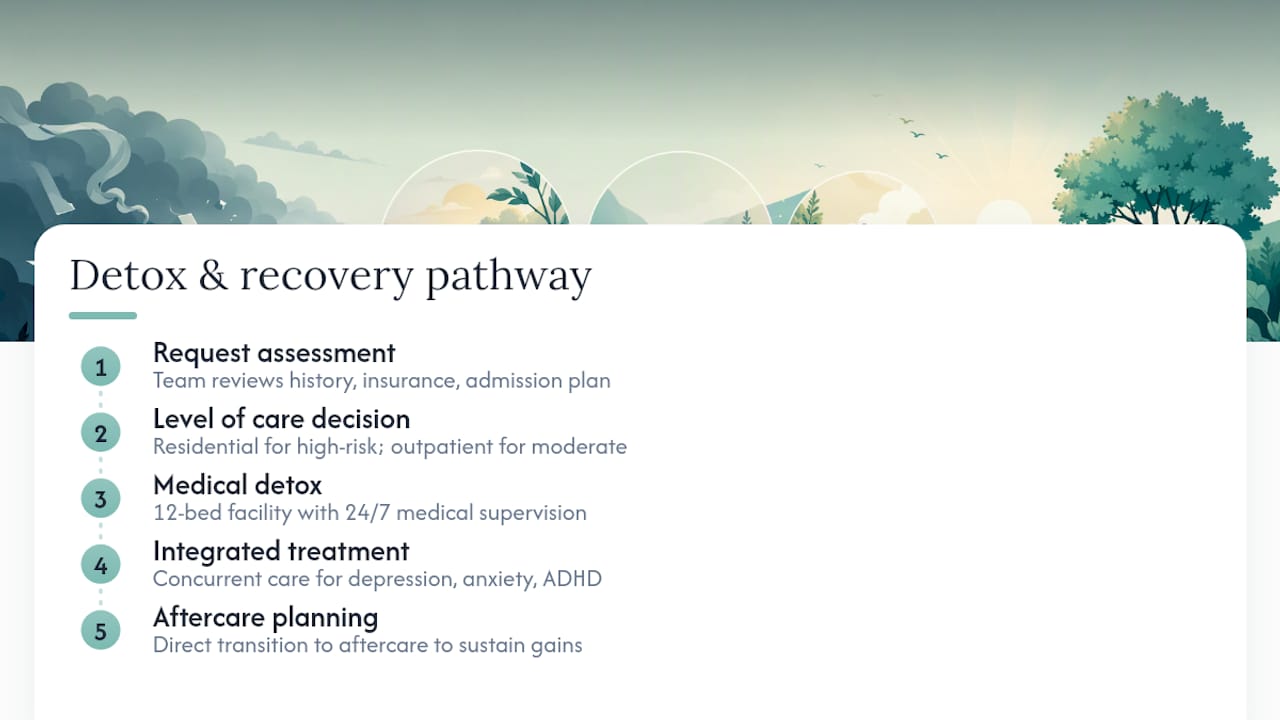
Connected Recovery runs a 12-bed boutique facility in Van Nuys, built specifically around the cases where withdrawal carries real risk. That means 24/7 medical supervision through detox, integrated treatment for co-occurring depression, anxiety, or ADHD alongside the substance use itself, and a plan built around your specific history rather than a generic protocol.

Residential care fits best for anyone dealing with severe dependence, active suicidal thoughts, an unstable home environment, or a mental health condition that’s gone untreated alongside the Adderall use. If your situation looks more moderate, outpatient-adjacent options and individual therapy can still provide structure without a residential stay.
Getting started is straightforward: request an assessment, and the team will walk through your history, insurance or private-pay options, and what admission actually looks like day one. From there, medical detox transitions directly into aftercare planning so the stability you build in the first week doesn’t unravel in month three.
This article is general information, not a substitute for advice from a qualified doctor. Consult a qualified healthcare professional about your own circumstances before acting on anything here.
Sources
- Treatment for amphetamine withdrawal - PMC - NIH
- AddictionCenter — Adderall withdrawal and detox
- NCBI — Post-acute withdrawal syndrome content
Recommended
DHCS Licensed · Joint Commission Accredited
If you or a loved one is struggling with substance use, our admissions team is available to verify your insurance benefits and help you begin recovery. All calls are confidential.