
Fentanyl Withdrawal Symptoms: Timeline, COWS, and Care

Fentanyl withdrawal symptoms typically arrive as a cluster of five overlapping problems: autonomic surges (racing heart, sweating, chills), severe GI distress (nausea, vomiting, diarrhea), deep musculoskeletal pain, psychiatric symptoms (anxiety, insomnia, intense cravings), and the four clinically diagnostic opioid signs measured by the Clinical Opioid Withdrawal Scale (COWS). If your dependence is moderate to severe, or has lasted more than a few weeks, the single most important first step is contacting a medically supervised detox program before symptoms peak.
The core symptom clusters at a glance:
- Autonomic: tachycardia, hypertension, diaphoresis, fever, chills
- Gastrointestinal: nausea, vomiting, diarrhea, abdominal cramping
- Musculoskeletal: muscle aches, bone pain, restless legs, muscle twitches
- Neurologic/psychiatric: insomnia, anxiety, agitation, intense opioid cravings
- Diagnostic opioid signs: mydriasis (dilated pupils), piloerection (goosebumps), lacrimation/rhinorrhea (tearing and runny nose), yawning
In the first 24 hours: contact a physician or an accredited detox program. Do not attempt cold-turkey withdrawal alone. Buprenorphine and methadone can dramatically reduce symptom severity when started at the right time, and programs like Connected Recovery offer 24/7 medically supervised detox with medication-assisted treatment (MAT) built in.
Pro Tip: If you are unsure whether your symptoms are severe enough to warrant medical care, they probably are. The COWS tool takes about five minutes to score and gives clinicians an objective number to guide treatment decisions. Ask any detox program whether they use it on admission.
Key Takeaways
Fentanyl withdrawal symptoms typically peak within the first few days, tend to be more severe and prolonged than non-fentanyl opioid withdrawal, and require medically supervised detox with MAT to manage safely.
| Point | Details |
|---|---|
| Symptom onset and peak | Symptoms typically begin within several hours to about a day, with a peak that usually occurs within a few days; PAWS can persist beyond the acute phase. |
| Four diagnostic signs | Mydriasis, piloerection, lacrimation/rhinorrhea, and yawning confirm opioid withdrawal clinically. |
| Fentanyl is different | Clinical research shows fentanyl-exposed patients have higher and more prolonged withdrawal scores than non-fentanyl opioid users. |
| MAT is standard of care | Buprenorphine, methadone, and clonidine reduce severity; cold-turkey detox raises fatal overdose risk after tolerance drops. |
| Red flags require 911 | Altered consciousness, chest pain, suicidal ideation, or inability to keep fluids down warrant emergency care immediately. |
Table of Contents
- What are the actual fentanyl withdrawal symptoms you should expect?
- How the fentanyl withdrawal timeline typically unfolds
- Why fentanyl withdrawal is often more severe than other opioid withdrawal
- How clinicians measure withdrawal severity with COWS and SOWS
- Evidence-based medical treatments during fentanyl detox
- Medical complications and red flags that require urgent care
- Practical self-care steps during fentanyl withdrawal
- What to expect in a medically supervised detox program
- What the research actually tells you that most guides skip
- Sources
What are the actual fentanyl withdrawal symptoms you should expect?
Fentanyl detox symptoms span every major body system, and knowing which ones are clinically diagnostic versus which are simply miserable helps you communicate clearly with a provider. The Merck Manual identifies four signs as specifically pathognomonic for opioid withdrawal.
The four diagnostic opioid withdrawal signs:
These four are what clinicians look for to confirm opioid withdrawal rather than another medical condition. Everything else on the list below can overlap with flu, anxiety disorders, or other syndromes.
Full symptom list by system:
Early symptoms (first 8–24 hours):
- Agitation and anxiety
- Muscle aches and bone pain
- Excessive tearing and runny nose
- Sweating and yawning
- Insomnia and restlessness
Later symptoms (24–72 hours and beyond):
- Nausea, vomiting, and diarrhea
- Abdominal cramping
- Dilated pupils and goosebumps
- Tachycardia and elevated blood pressure
- Intense opioid cravings
MedlinePlus describes the overall experience as very uncomfortable but not immediately life-threatening for most people. That said, the GI losses from prolonged vomiting and diarrhea can cause dangerous dehydration, and the psychiatric symptoms, particularly cravings and anxiety, carry their own serious risks.
Pro Tip: Track your pulse and temperature every few hours during early withdrawal. A resting heart rate consistently above 120 beats per minute, or a temperature above 101°F, warrants a call to a clinician or an urgent care visit. These numbers give your provider something concrete to act on.

How the fentanyl withdrawal timeline typically unfolds
The fentanyl detox timeline differs from heroin or prescription opioid withdrawal in ways that matter for planning. For short-acting illicit fentanyl, symptoms often begin within 8–24 hours of the last dose. For extended-release patches or long-term high-dose use, onset can be delayed.
Typical fentanyl withdrawal stages:
- Onset (8–24 hours): Early autonomic signs appear: anxiety, sweating, yawning, muscle aches, insomnia. Cravings begin.
- Peak (24–72 hours): Symptoms reach maximum intensity. GI distress, bone pain, tachycardia, and psychiatric symptoms are most severe. This is the window of highest clinical risk.
- Acute resolution (days 4–7): Physical symptoms begin to ease for most people. Sleep remains disrupted; cravings persist.
- Post-acute withdrawal syndrome (PAWS) (weeks to months): Mood disturbances, sleep problems, low energy, and episodic cravings can linger well beyond the acute phase.
The opioid detox timeline for fentanyl tends to run longer than for shorter-acting opioids, and the peak is often sharper. StatPearls notes that mood and sleep disturbances can persist for weeks to months even after physical symptoms resolve.
Factors that lengthen or intensify the timeline:
- Lipophilicity: Fentanyl sequesters in fat and muscle tissue, redistributing slowly back into the bloodstream and prolonging the elimination window
- Extended-release formulations: Patches and depot preparations delay onset and extend the acute phase
- Higher cumulative dose or longer duration of use: Both correlate with more severe and prolonged withdrawal
- Body composition: Higher body fat percentage can extend sequestration and slow clearance
- Cutting agents and co-exposures: Illicit fentanyl often contains adulterants that complicate the withdrawal picture unpredictably
Why fentanyl withdrawal is often more severe than other opioid withdrawal
This is not just a potency story. A quasi-experimental PMC study directly compared withdrawal severity in people exposed to illicit fentanyl versus non-fentanyl opioids. The fentanyl-exposed group showed higher withdrawal scores and a more prolonged course, with an inverted-U pattern peaking around days 2–3 and symptom elevation extending beyond day 7 for many participants.
Three factors drive this pattern. First, fentanyl’s extreme potency means the opioid receptors experience a more abrupt and dramatic shift when the drug is removed. Second, its high lipophilicity leads to tissue sequestration, so elimination is slower and less predictable than the drug’s short plasma half-life would suggest. Third, the illicit supply is highly variable in potency, meaning the nervous system may have adapted to wildly inconsistent receptor stimulation, making stabilization harder.
Direct clinical implications:
- Longer monitoring windows are needed compared to heroin or prescription opioid withdrawal
- Buprenorphine induction protocols may need adjustment because the sequestration effect can complicate timing
- GI symptom management often requires more aggressive pharmacologic support
- Cardiac monitoring for tachycardia and hypertension is particularly important in the first 72 hours
- PAWS planning should be built into the discharge conversation from day one
How clinicians measure withdrawal severity with COWS and SOWS
The Clinical Opioid Withdrawal Scale (COWS) is the professional standard for quantifying how severe withdrawal is at any given moment. It scores 11 observable signs, producing a total between 0 and 47. The Short Opiate Withdrawal Scale (SOWS) is a validated patient-reported companion tool that captures subjective experience the clinician may not directly observe.
COWS score ranges and clinical interpretation:
| COWS Score | Severity Category | Typical Clinical Response |
|---|---|---|
| 1–4 | Minimal | Monitoring only; supportive care |
| 8–12 | Mild | Symptomatic medications; outpatient management possible |
| 13–24 | Moderate | Consider supervised detox; pharmacologic support indicated |
| 13–24 | Moderately severe | Medically supervised detox strongly recommended |
| 25–47 | Severe | Urgent medical management; inpatient stabilization |
COWS scores do more than describe severity. They drive the timing of buprenorphine induction. Clinicians typically wait until a patient scores at least 8–12 on COWS before initiating buprenorphine, because giving it too early, while fentanyl is still occupying receptors, can trigger precipitated withdrawal, a sudden and severe intensification of symptoms. This is one of the most common and preventable complications in opioid detox.
How COWS guides clinical decisions in practice:
- A score below 8 generally means buprenorphine induction should wait
- Scores of 13 and above typically indicate the patient needs pharmacologic intervention, not just supportive care
- Serial COWS scoring every few hours tracks whether symptoms are escalating or resolving
- Autonomic signs within the scale (pulse rate, sweating, restlessness) flag cardiovascular risk early
Evidence-based medical treatments during fentanyl detox
ASAM and SAMHSA guidelines are unambiguous: medically supervised withdrawal and medication-assisted treatment are the standard of care for opioid use disorder. Cold-turkey detox without medical support is strongly discouraged because tolerance drops rapidly, and if relapse occurs, the risk of fatal overdose rises sharply.
First-line and supportive medications:
- Buprenorphine: A partial opioid agonist that blunts withdrawal symptoms and cravings. Induction requires a COWS score of at least 8–12 to avoid precipitated withdrawal. Particularly effective for ongoing MAT after detox.
- Methadone: A full agonist dispensed through licensed opioid treatment programs (OTPs). Provides stable receptor coverage and is especially useful when buprenorphine induction timing is complicated by fentanyl sequestration.
- Clonidine: An alpha-2 agonist that reduces autonomic symptoms (sweating, tachycardia, anxiety) without opioid receptor activity. Useful as an adjunct when MAT is not immediately available.
- Ondansetron: For nausea and vomiting control.
- Loperamide: For diarrhea management.
- NSAIDs (ibuprofen, naproxen): For myalgia and bone pain.
- IV fluids: For moderate to severe dehydration from GI losses.
A critical caution specific to fentanyl: because of tissue sequestration, residual fentanyl may still be present even when a patient feels ready for buprenorphine induction. Clinicians experienced with fentanyl-exposed patients sometimes use extended low-dose buprenorphine induction protocols to reduce precipitated withdrawal risk. Ask your provider specifically about their induction approach for fentanyl.
Pro Tip: Before entering any detox program, ask two direct questions: “What is your buprenorphine induction protocol for fentanyl-exposed patients?” and “What is your plan if I relapse after discharge?” A program that has clear, specific answers to both is one that has thought through fentanyl’s particular challenges.
For people managing anxiety alongside withdrawal, practical coping strategies can complement pharmacologic treatment during the acute phase.
Medical complications and red flags that require urgent care
Most opioid withdrawal is not immediately life-threatening, but complications can develop quickly, particularly with fentanyl, where autonomic instability tends to be more pronounced. The Merck Manual specifically flags autonomic signs as the ones to monitor most closely, because tachycardia, hypertension, and diaphoresis can herald severe dehydration, aspiration from vomiting, and electrolyte disturbances.
Call 911 or go to an emergency room immediately if you experience: For guidance on when and how to act fast with acute symptoms, see immediate symptom advice.
- Altered consciousness or confusion
- Chest pain or difficulty breathing
- Persistent vomiting that prevents keeping any fluids down for more than 12 hours
- Heart rate above 130 beats per minute at rest
- Severe hypertension (systolic above 180 mmHg)
- High fever (above 103°F)
- Suicidal ideation or intent to harm yourself
The naloxone point deserves emphasis. Anyone who has recently gone through fentanyl detox, or who is at risk of relapse, should have naloxone (Narcan) accessible and should make sure at least one person nearby knows how to use it. This is not a worst-case precaution. It is a standard harm-reduction measure that saves lives. For more on why professional detox prevents complications, the clinical rationale is straightforward: 24/7 monitoring catches these red flags before they become emergencies.
Practical self-care steps during fentanyl withdrawal
If you are waiting for a detox bed or managing mild symptoms under clinician guidance, these steps reduce suffering and lower complication risk. None of them replace medical supervision, but they matter.
Hydration and nutrition:
- Drink water, diluted sports drinks, or oral rehydration solutions (like Pedialyte) consistently, even in small sips if nausea is severe
- Avoid caffeine and alcohol, both of which worsen dehydration and disrupt sleep
- Eat small, bland meals when possible: crackers, rice, bananas, toast
Pain and fever management:
- Ibuprofen (400–600 mg every 6–8 hours with food) for muscle and bone pain, if your stomach tolerates it
- Acetaminophen (500–1,000 mg every 6 hours) as an alternative if GI symptoms are severe
- Warm baths or heating pads for muscle cramps
Sleep and rest:
- Keep the room cool and dark; fentanyl withdrawal disrupts thermoregulation, so temperature control matters more than usual
- Avoid screens for at least an hour before attempting sleep
- Short walks or light stretching can reduce restless leg symptoms enough to make sleep possible
Harm-reduction essentials:
- Do not use alone. Have someone check on you every few hours.
- Avoid mixing any sedatives (benzodiazepines, alcohol, sleep aids) with opioids if you are at risk of relapse. The combination is a primary driver of overdose deaths.
- Keep naloxone within reach and make sure your support person knows how to administer it.
- Have a plan for getting to care quickly if symptoms escalate.
Pro Tip: Electrolyte imbalance from GI losses is one of the most underestimated risks in withdrawal. A simple oral rehydration solution (1 liter of water, 6 teaspoons of sugar, half a teaspoon of salt) costs nothing and can prevent a dehydration-related ER visit. For guidance on coping with withdrawal and anxiety in the early hours, having a concrete plan before symptoms peak makes a measurable difference.
What to expect in a medically supervised detox program
Medically supervised detox offers something unmonitored withdrawal cannot: 24/7 clinical oversight, medication-adjusted in real time, with a plan for what comes next. The first hours after admission set the foundation for everything that follows.
Typical components of a medically supervised fentanyl detox:
- Initial clinical assessment: A full medical history, physical exam, urine drug screen, and COWS scoring to establish baseline severity
- Medication induction: Buprenorphine or methadone started at the clinically appropriate COWS threshold, with dose titration over the following 24–72 hours
- Vital-sign monitoring: Pulse, blood pressure, temperature, and respiratory rate checked regularly, with more frequent monitoring during peak withdrawal
- Symptomatic medications: Clonidine, ondansetron, loperamide, NSAIDs, and IV fluids as needed
- Psychosocial support: Individual check-ins, group support, and psychiatric evaluation for co-occurring conditions
- Discharge and aftercare planning: MAT referrals, residential treatment options, and a relapse-prevention plan before leaving
Questions to ask any detox provider before admission:
- What is your medical staffing model, and is a physician available around the clock?
- Do you use COWS scoring on admission and throughout the stay?
- What is your buprenorphine induction protocol for fentanyl-exposed patients specifically?
- Do you offer MAT continuation after detox, or do you provide referrals?
- What does your aftercare planning process look like?
Connected Recovery’s medical detox program in Van Nuys operates with 24/7 medical supervision across a 12-bed facility, which means the patient-to-staff ratio stays low enough for individualized monitoring. The program integrates MAT, dual diagnosis care for co-occurring mental health conditions, and structured aftercare planning, including residential treatment as a direct step-down option. For people whose withdrawal is complicated by anxiety, depression, or trauma, that integrated model matters. A low patient-to-staff ratio is not a luxury in fentanyl detox. It is a clinical necessity.
What the research actually tells you that most guides skip
The standard advice on fentanyl withdrawal goes something like this: symptoms are like a bad flu, they peak in a few days, and medication helps. That framing is not wrong. It is just incomplete in ways that matter.
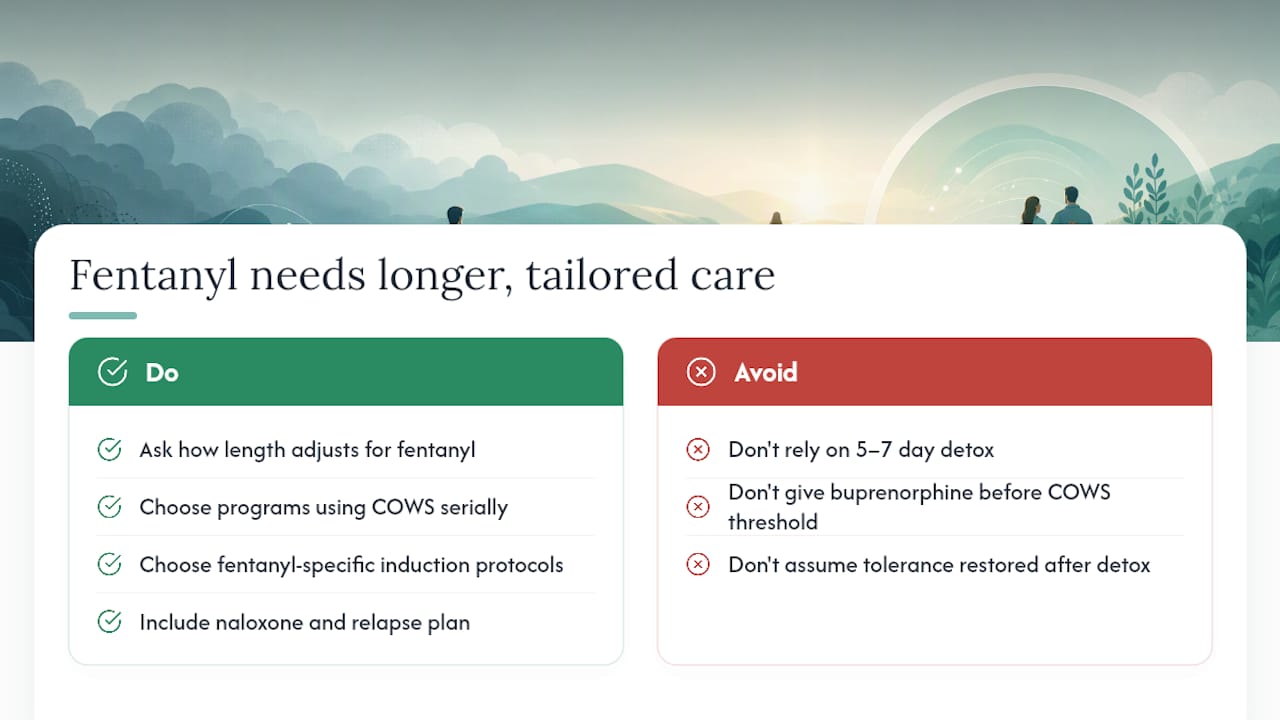
The PMC quasi-experimental study changes the picture meaningfully. Fentanyl-exposed patients did not just have worse symptoms at peak. Their withdrawal scores stayed elevated beyond day 7 at rates that non-fentanyl opioid users did not show. That has a direct implication most guides do not state plainly: a standard five-to-seven-day detox protocol, designed around heroin or oxycodone timelines, may discharge a fentanyl patient while they are still in the thick of acute withdrawal. The question to ask your provider is not just “how long is your program?” but “how do you adjust length of stay for fentanyl-exposed patients?”
The COWS tool is another area where the conventional framing undersells the complexity. Most articles describe it as a severity scale. It is also a timing instrument. Giving buprenorphine before a patient hits the right COWS threshold causes precipitated withdrawal, which is more severe than the withdrawal you were trying to treat. With fentanyl’s tissue sequestration, that threshold is harder to call than with shorter-acting opioids. Experienced clinicians know this. Not every detox program does.
The third thing most guides understate is the post-detox overdose window. Tolerance drops during withdrawal. A person who completes a seven-day detox and relapses on day eight is not returning to their pre-detox tolerance. They are dosing against a system that has partially reset. That is why naloxone access and a concrete relapse plan are not afterthoughts. They belong in the discharge conversation on day one, not the last hour before leaving.
If you are facing fentanyl withdrawal, the most useful thing you can do is find a program that uses COWS serially, has a specific induction protocol for fentanyl, and builds the post-detox plan before you arrive. Those three things separate programs that understand fentanyl’s particular biology from programs that treat it like any other opioid.
This article is general information, not a substitute for advice from a qualified doctor. Consult a qualified healthcare professional about your own circumstances before acting on anything here.
Sources
These are the primary clinical and government references cited throughout this article:
- Opioid toxicity and withdrawal - Merck Manual Professional
- Examining the Severity and Progression of Illicitly Manufactured Fentanyl Withdrawal: A Quasi-experimental Comparison - PMC
- Opioid withdrawal - StatPearls - NCBI Bookshelf
- Opioid withdrawal - MedlinePlus
- ASAM National Practice Guideline: Treatment of Opioid Use Disorder - SAMHSA
Recommended
- Opioid Detox Timeline: What to Expect and When to Get Help | Connected Recovery Inc.
- Detox Withdrawal Symptoms: What to Expect During Recovery | Connected Recovery Inc.
- Cope with Withdrawal and Anxiety: Immediate Steps and Help | Connected Recovery Inc.
- How Addiction Develops Over Time: A Clinical Timeline | Connected Recovery Inc.
DHCS Licensed · Joint Commission Accredited
If you or a loved one is struggling with substance use, our admissions team is available to verify your insurance benefits and help you begin recovery. All calls are confidential.