
Opioid Detox Timeline: What to Expect and When to Get Help

For short-acting opioids like heroin or oxycodone, the acute opioid detox timeline typically runs from onset within 6–24 hours after the last dose, peak symptoms around 36–72 hours, and gradual resolution over 4–10 days. Long-acting opioids like methadone shift that window significantly: onset may not begin until 12–48 hours after the last dose, and the acute phase can stretch 10–20 days. After the acute phase clears, a post-acute withdrawal syndrome (PAWS) can linger for weeks to months, with anxiety, insomnia, and cravings that drive relapse risk.
Two factors change the timeline faster than anything else:
- Opioid type: Short-acting (heroin, fentanyl, oxycodone) vs. long-acting (methadone, extended-release morphine) determines both onset and total duration.
- Chronicity of use: Daily use over months or years produces more intense and prolonged withdrawal than short-term exposure.
Anyone detoxing from long-acting opioids, managing a co-occurring medical or mental health condition, or coming off heavy daily use should strongly consider medically supervised detox rather than attempting a home taper alone. For lower-risk situations involving short-term opioid exposure, a clinician-guided taper may be manageable outpatient, but medical oversight still improves safety and comfort.
Key Takeaways
The acute opioid detox timeline runs 4–10 days for short-acting opioids and up to 20 days for long-acting opioids like methadone, with a post-acute phase that can persist for weeks and significantly raises relapse risk without structured follow-up.
| Point | Details |
|---|---|
| Acute timeline by opioid type | Short-acting opioids peak at 36–72 hours and resolve in 4–10 days; methadone can extend the acute phase to 10–20 days. |
| PAWS risk after acute detox | Anxiety, insomnia, and cravings can persist for weeks to months and are a primary driver of relapse without ongoing support. |
| When to choose supervised care | Long-acting opioids, heavy daily use, pregnancy, polysubstance use, or co-occurring illness all warrant inpatient or residential medical detox. |
| Red-flag emergency signs | Inability to keep fluids down, altered mental status, suicidal ideation, or seizures require immediate emergency care. |
| Connected Recovery’s program | Connected Recovery offers 24/7 medically supervised detox, MAT, dual diagnosis care, and aftercare planning in a 12-bed boutique facility in Van Nuys, CA. |
Table of Contents
- Why does opioid withdrawal happen in the first place?
- What are the common signs of opioid withdrawal?
- How does the opioid detox timeline progress day by day?
- Special cases that change the timeline
- How is opioid withdrawal managed medically?
- Where should you detox: home, outpatient, or inpatient?
- When should you get emergency care during withdrawal?
- What comes after detox, and why does it matter so much?
- What the hardest days actually feel like
- Medically supervised detox at Connected Recovery in Van Nuys
- Authoritative U.S. resources and clinical guidance
- Sources
Why does opioid withdrawal happen in the first place?
Withdrawal is the body’s response to a sudden drop in opioid receptor activation after tolerance has developed. When opioids bind to mu-opioid receptors consistently over time, the nervous system compensates by downregulating its own natural opioid activity. Remove the drug, and the system swings into overdrive: elevated norepinephrine, hyperactive autonomic responses, and a flood of physical and psychological symptoms.
Two pharmacological variables drive almost everything about timing: half-life and receptor occupancy. A drug with a short half-life (heroin’s active metabolite, for example, clears in hours) vacates receptors quickly, triggering rapid onset. Methadone’s half-life of 24–36 hours means receptors stay occupied longer, delaying onset but extending the total withdrawal arc.
A few terms worth knowing:
Tolerance and physical dependence refer to the body’s physiological adaptation to a drug. Dependence does not require compulsive use; it can develop in anyone taking opioids regularly, including patients on prescribed pain medication.
Opioid use disorder (OUD) is a clinical diagnosis that includes compulsive use, loss of control, and continued use despite harm. Physical dependence is a component of OUD but is not the same thing.
Precipitated withdrawal occurs when an opioid antagonist (naloxone, naltrexone) or a partial agonist like buprenorphine is given before enough opioids have cleared the receptors. The result is an abrupt, severe withdrawal that comes on within minutes rather than hours. Timing and clinical judgment are everything here.
What are the common signs of opioid withdrawal?
Symptoms span four main domains: autonomic, gastrointestinal, musculoskeletal, and mood/cognition. They tend to appear in roughly that order, with autonomic and GI symptoms arriving first, followed by the psychological wave.
Physical symptoms:
- Nausea, vomiting, and diarrhea
- Muscle aches, cramps, and restless legs
- Excessive sweating and chills
- Yawning and runny nose (rhinorrhea)
- Pupil dilation (mydriasis)
- Goosebumps (piloerection)
- Elevated heart rate and blood pressure
Psychological symptoms:
- Intense anxiety and irritability
- Insomnia and disrupted sleep architecture
- Dysphoria and depression
- Powerful cravings, often peaking in the first 48–72 hours
For a deeper breakdown of what each symptom phase looks and feels like, the detox withdrawal symptoms guide at Connected Recovery covers the progression in practical detail.
Pro Tip: Dehydration is the most immediate physical danger during withdrawal. Drink small amounts of water or electrolyte solution (like Pedialyte) frequently rather than large volumes at once. If nausea is severe, over-the-counter antiemetics like dimenhydrinate can help, but vomiting that prevents any fluid retention for more than a few hours warrants medical attention.
How does the opioid detox timeline progress day by day?
Onset and peak windows depend heavily on whether the opioid is short-acting or long-acting. Short-acting opioids hit fast and resolve faster; long-acting opioids build slowly and linger. NCBI clinical guidelines document this distinction clearly, and it should directly inform any detox plan.
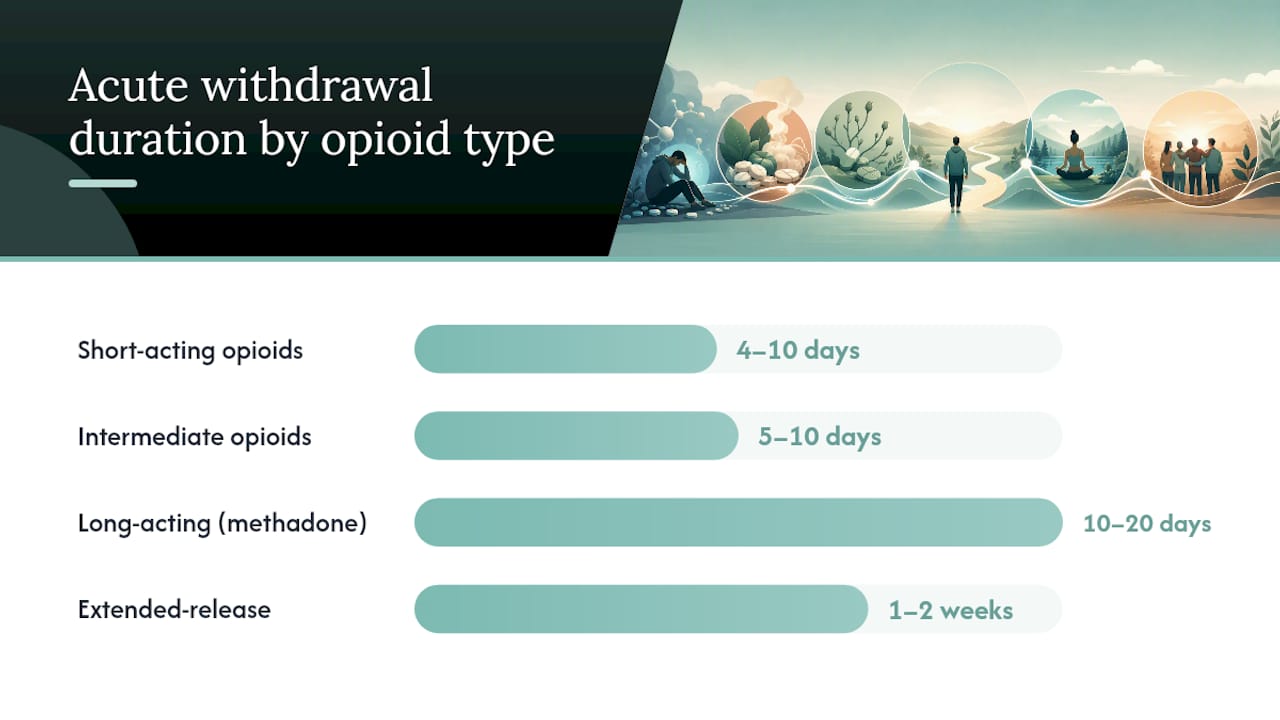
| Opioid Type | Typical Onset After Last Dose | Peak Symptoms | Acute Duration | Taper/MAT Notes |
|---|---|---|---|---|
| Short-acting (heroin, fentanyl) | 6–24 hours | 36–72 hours | 4–10 days | Buprenorphine induction after mild-moderate withdrawal onset |
| Intermediate (oxycodone, hydrocodone) | 8–24 hours | 48–72 hours | 5–10 days | Taper or buprenorphine; COWS-guided timing |
| Long-acting (methadone) | 12–48 hours | Days 4–6 | 10–20 days | Slow methadone taper over weeks to months; specialist oversight required |
| Extended-release formulations | onset within one to two days | peak symptoms within several days | acute symptoms lasting about one to two weeks | Clinician-directed taper strongly recommended |
Phase checklist
- Early phase (hours 6–24): Yawning, anxiety, runny nose, mild muscle aches, restlessness. For short-acting opioids, this phase arrives quickly.
- Peak phase (days 1–3): Nausea, vomiting, diarrhea, intense muscle cramps, insomnia, peak cravings, and elevated heart rate. This is the hardest stretch.
- Subsiding phase (days 4–10): Physical symptoms ease gradually. Sleep remains disrupted. Mood is low. Appetite begins returning.
- Weeks 2–12 (PAWS): Residual anxiety, intermittent insomnia, and cravings that come in waves. This phase is when relapse risk is highest.
Day-by-day sample timeline (short-acting opioids)
Day 0–1: The last dose wears off. Anxiety, yawning, and muscle restlessness begin. Sleep becomes difficult. Cravings are present but manageable.
Day 2–3: Peak intensity. Nausea and vomiting are common. Muscle aches feel like a severe flu. Diarrhea and sweating are frequent. Insomnia is nearly universal. Cravings spike hard.
Day 4–5: GI symptoms start to ease. Muscle pain softens. Fatigue and low mood dominate. Appetite may return slightly.
Day 6–7: Most acute physical symptoms have subsided. Energy is low. Mood remains flat or anxious. Sleep is still fragmented.
Weeks 2–12: The post-acute phase. Physical symptoms are largely gone, but anxiety, mood swings, and cravings can resurface unpredictably. This is the window where structured aftercare makes the biggest difference.
Special cases that change the timeline
These situations can dramatically accelerate or prolong symptoms, and nearly all of them require medical oversight rather than home management.
Precipitated withdrawal
Precipitated withdrawal is triggered when buprenorphine or naloxone is administered before enough opioids have cleared the receptors. Symptoms arrive within minutes and are typically far more severe than standard withdrawal: intense cramping, agitation, vomiting, and profound anxiety compressed into a short window. Avoiding it requires waiting until a patient shows mild-to-moderate withdrawal signs (confirmed by a COWS score) before initiating buprenorphine.
Ultra-rapid and rapid detox protocols
These approaches use anesthesia or heavy sedation to compress withdrawal into hours. NCBI research on detoxification approaches notes that rapid and ultra-rapid protocols carry higher risks, including anesthesia complications and increased medical events, and are not universally recommended despite some short-term abstinence data in limited studies. Standard medically supervised detox with MAT remains the evidence-based default.
Pregnancy
Opioid withdrawal during pregnancy carries risks for both the pregnant person and the fetus, including preterm labor and fetal distress. Abrupt cessation is generally not recommended. Methadone or buprenorphine maintenance is the standard of care, and inpatient monitoring is often necessary. This is not a situation for home management.
Polysubstance use
When opioids are combined with benzodiazepines, alcohol, or other CNS depressants, withdrawal becomes significantly more complex. Benzodiazepine and alcohol withdrawal can be life-threatening on their own, and the overlapping timelines require careful medical sequencing. Inpatient care is almost always the right call.
Risk callout: Polysubstance withdrawal and pregnancy are two situations where the standard opioid withdrawal timeline no longer applies cleanly. Attempting to manage either at home without medical oversight significantly increases the risk of serious complications, including seizures, cardiac events, and fetal harm. If either applies to your situation, contact a medical provider before stopping any substance.
How is opioid withdrawal managed medically?
Medication-assisted approaches using methadone or buprenorphine, along with non-opioid agents like lofexidine and clonidine, measurably reduce both symptom severity and medical risk. Medical supervision improves safety across every phase of the opioid detox process.
Medication classes and their roles:
- Opioid agonist maintenance (methadone, buprenorphine): Used for both long-term MAT and short detox tapers. Methadone requires a licensed opioid treatment program; buprenorphine can be prescribed in office-based settings. Research confirms that buprenorphine should be initiated only after mild-to-moderate withdrawal is present to avoid precipitated withdrawal.
- Alpha-2 agonists (clonidine, lofexidine): These non-opioid agents reduce autonomic symptoms like sweating, elevated heart rate, and anxiety. Lofexidine is FDA-approved specifically for opioid withdrawal management; clonidine is used off-label. Neither addresses cravings as effectively as opioid agonists.
- Symptomatic medications: Antiemetics (ondansetron, promethazine) for nausea; loperamide for diarrhea; NSAIDs or acetaminophen for muscle pain; hydroxyzine or trazodone for sleep and anxiety.
- Naltrexone: An opioid antagonist used for relapse prevention after detox. Timing matters: starting naltrexone too early causes precipitated withdrawal. Clinicians typically wait 7–10 days after the last opioid dose before initiating it, longer for methadone.
How COWS guides safe buprenorphine induction
The Clinical Opiate Withdrawal Scale (COWS) is a structured 11-item assessment that scores withdrawal severity in real time. Clinicians use it to confirm that enough opioids have cleared the receptors before giving buprenorphine. A COWS score of 8 or higher generally indicates sufficient withdrawal to begin induction safely. Skipping this step is what causes precipitated withdrawal.
From SAMHSA’s national guidance: Detoxification alone is not sufficient treatment for opioid use disorder. SAMHSA recommends that detox be followed by ongoing treatment, including counseling and MAT maintenance, to meaningfully reduce relapse risk.
For medication-assisted treatment options that continue through and beyond detox, Connected Recovery offers MAT as part of its integrated program in Van Nuys.
Where should you detox: home, outpatient, or inpatient?
Lower-risk situations involving short-term opioid exposure may be manageable with outpatient support or a clinician-directed home taper. Long-acting opioids, heavy daily use, co-occurring illness, pregnancy, or polysubstance use all point toward supervised inpatient or residential detox. Mayo Clinic guidance is direct: if you’ve used opioids for more than 7–10 days, a clinician-directed slow taper is usually the safer path, and abrupt cessation without medical support is discouraged.
Home care:
- Pros: Privacy, comfort, no cost for facility
- Cons: No medication access, no monitoring, higher risk of relapse or medical emergency, difficult to manage alone
Outpatient medical detox:
- Pros: Daily or frequent clinical check-ins, medication access, lower cost than inpatient
- Cons: No 24/7 monitoring, requires stable home environment, not appropriate for high-risk cases
Inpatient/residential detox:
- Pros: 24/7 medical supervision, immediate medication adjustment, structured environment, emotional support, seamless transition to ongoing treatment
- Cons: Higher cost, requires leaving home; insurance coverage varies
For a detailed comparison, inpatient vs. outpatient detox breaks down how to match your risk profile to the right setting.
Questions to ask any detox or residential program
- Is there 24/7 on-site medical staffing, or only on-call coverage?
- Do you offer MAT (buprenorphine or methadone) during detox?
- How do you handle co-occurring mental health conditions?
- What does aftercare planning look like, and when does it start?
- Do you accept my insurance, and what are the out-of-pocket costs?
- What is the typical length of stay for opioid detox?
When should you get emergency care during withdrawal?
Opioid withdrawal is rarely life-threatening for otherwise healthy people. The primary medical dangers are dehydration and electrolyte loss from sustained vomiting and diarrhea. That said, certain signs require immediate medical attention.
Red flags that warrant a 911 call or ER visit:
- Inability to keep any fluids down for more than a few hours (severe dehydration risk)
- Fainting, dizziness, or significantly low blood pressure
- Seizures (rare in opioid-only withdrawal but possible with polysubstance use)
- Confusion, altered mental status, or loss of consciousness
- Suicidal thoughts or self-harm ideation
- Extremely high fever (above 103°F)
- Chest pain or irregular heartbeat
If you or someone you know is in crisis, take these steps:
- Call 911 immediately or go to the nearest emergency room.
- Bring all medication bottles, including any opioids, MAT medications, or other prescriptions.
- Tell the ER staff about recent opioid use, the last dose taken, and any other substances used. This prevents accidental naloxone administration that could trigger precipitated withdrawal.
- If the person is unconscious and opioid overdose is possible, administer naloxone (Narcan) if available and call 911.
What comes after detox, and why does it matter so much?
Detox addresses physical dependence. It does not address the behavioral, psychological, and social factors that drive opioid use disorder. Without structured follow-up, relapse rates are high, particularly during the PAWS window of weeks 2–12 when cravings and mood symptoms resurface without warning. NCBI clinical literature is consistent on this point: transition to structured residential care or continued MAT after detox reduces early relapse.
Aftercare options to consider:
- Outpatient counseling (individual and group therapy)
- Intensive outpatient programs (IOP), typically 9–15 hours per week
- Residential treatment for continued structure and peer support
- MAT maintenance with buprenorphine or methadone
- Peer-support groups (12-step programs, SMART Recovery)
- Dual diagnosis treatment for co-occurring mental health conditions like depression, PTSD, or anxiety
The timing of aftercare setup matters as much as the choice. Arrange the next level of care before detox ends, not after. Gaps between detox discharge and the first outpatient appointment are when relapse most often occurs.
Screening for co-occurring mental health disorders during detox is also worth prioritizing. Anxiety, depression, and PTSD frequently underlie opioid use, and treating only the substance without addressing those conditions leaves the most important drivers unaddressed. Aftercare planning that integrates mental health support from the start produces better outcomes than substance-only approaches.
Pro Tip: Before discharge from any detox program, build a short relapse-prevention checklist: three people you can call at any hour, your top two personal triggers and a specific plan for each, your MAT prescription or next appointment date, and the number for the SAMHSA National Helpline (1-800-662-4357). Keep it on your phone.
What the hardest days actually feel like
Most patients describe days 2 and 3 as the peak, and they are right. The flu-like physical symptoms, the insomnia, and the cravings all converge in that 48–72-hour window. What tends to make the biggest practical difference is not willpower. It is hydration, medication access, and not being alone.

Patients who go through medically supervised detox consistently report that having someone adjust their medications in real time, manage their nausea, and simply be present during the worst hours changes the experience significantly. The post-acute phase is subtler but arguably harder to navigate alone: the physical crisis has passed, but the mood and craving symptoms that drive relapse are still active for weeks. Integrated support during that window, whether residential treatment, MAT maintenance, or structured outpatient care, is what separates a completed detox from a sustained recovery.
Medically supervised detox at Connected Recovery in Van Nuys
For people who need more than a home taper, Connected Recovery’s 12-bed boutique program in Van Nuys, Los Angeles offers 24/7 medical supervision, individualized treatment plans, and MAT integration from day one. The small size is deliberate: with only 12 beds, every patient gets direct clinical attention rather than rotating through a large facility’s standard protocols.

Connected Recovery’s program covers the full arc from initial detox through residential treatment and aftercare planning:
- Medical detox with around-the-clock monitoring and medication management
- Medication-assisted treatment (buprenorphine, methadone) integrated into the detox and residential phases
- Dual diagnosis care for co-occurring mental health conditions
- Residential treatment for continued structure after acute detox
- Comprehensive aftercare planning before discharge
Both private pay and insurance options are available. To find out whether your insurance is accepted or to speak with the intake team directly, visit Connectedrecoverycenter or call the facility to request an assessment.
Authoritative U.S. resources and clinical guidance
The core U.S. guidance on opioid withdrawal and detox comes from SAMHSA, NCBI clinical guidelines, MedlinePlus, and Mayo Clinic. These are the sources clinicians and treatment programs reference when building detox protocols.
Key resources:
- SAMHSA National Helpline — 1-800-662-4357, free, confidential, 24/7 treatment referral and information service
- NCBI Clinical Guidelines for Withdrawal Management — evidence-based protocols for opioid withdrawal onset, peak, and duration
- MedlinePlus: Opiate and Opioid Withdrawal — plain-language clinical overview of symptoms, risks, and treatment
- Journal of Clinical Pharmacy and Therapeutics: Opioid Withdrawal Symptoms and Management — peer-reviewed review of medication options including buprenorphine, methadone, lofexidine, and clonidine
- NCBI: Opioid Detoxification Approaches — clinical review of detox methods including tapering schedules and rapid detox risks
- SAMHSA Treatment Locator — find accredited detox and treatment programs near you
This article provides general health information and is not a substitute for professional medical advice. If you or someone you know is experiencing opioid withdrawal or considering detox, consult a qualified healthcare provider or call SAMHSA’s National Helpline at 1-800-662-4357 to confirm current treatment options and get personalized guidance.
Sources
- Withdrawal Management - Clinical Guidelines for Withdrawal Management and Treatment of Drug Dependence in Closed Settings - NCBI Bookshelf
- Opiate and opioid withdrawal: MedlinePlus Medical Encyclopedia
- Opioid withdrawal symptoms, a consequence of chronic opioid use and opioid use disorder: Current understanding and approaches to management
- SAMHSA national helpline
Recommended
DHCS Licensed · Joint Commission Accredited
If you or a loved one is struggling with substance use, our admissions team is available to verify your insurance benefits and help you begin recovery. All calls are confidential.