
Private Detox Intake Step by Step: Your Clear Guide

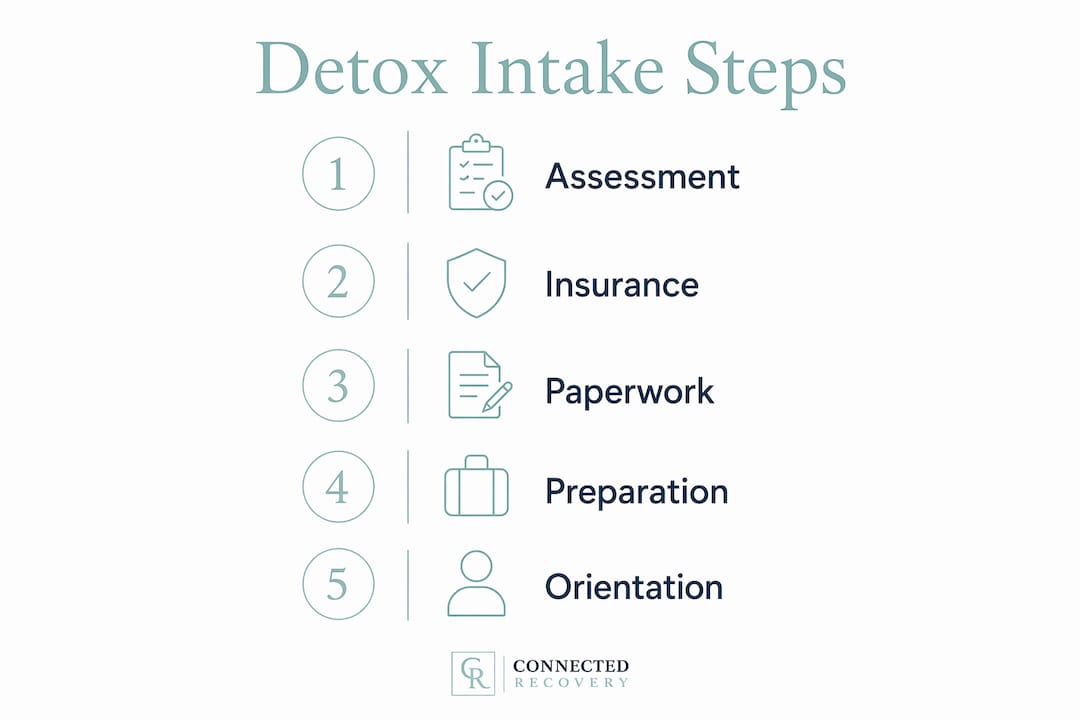
Private detox intake is a structured admission process that moves through clinical assessment, insurance verification, paperwork, and facility orientation before treatment begins. Knowing each stage in advance removes the guesswork and reduces the anxiety that stops many people from taking the first step. The private detox intake step by step process is more manageable than most people expect. Connected Recovery and similar boutique facilities have refined this process to keep the focus on you, not on administrative hurdles. This guide walks you through every stage so you arrive prepared and confident.
What is involved in the initial clinical assessment during private detox intake?
The initial clinical assessment is the first and most consequential step in the detox facility intake process. Its purpose is to determine your medical needs, identify the appropriate level of care, and decide whether medical detox is required before residential treatment begins. Facilities conduct this assessment in person, by phone, or by video, depending on your location and circumstances.
During the assessment, a clinician collects detailed information across several areas:
- Substance use history: What substances you use, how often, and for how long
- Mental health history: Any diagnosed or undiagnosed conditions, previous psychiatric treatment, and current symptoms
- Physical health: Existing medical conditions, recent illnesses, and current medications
- Prior treatment: Any previous detox or rehab episodes and their outcomes
- Social context: Living situation, support network, and any immediate safety concerns
The pre-admission assessment evaluates safety, care level, co-occurring conditions, and determines detox necessity. That determination shapes every decision that follows, from staffing to medication protocols.
Pro Tip: Be as specific and honest as possible during this assessment. Clinicians are not there to judge you. The more accurate your answers, the more precisely your care plan will match your actual needs.

Co-occurring mental health conditions are common among people entering detox. Connected Recovery treats both substance use and co-occurring disorders through an integrated approach, which means the assessment captures the full picture rather than just the substance use piece. That integration matters because untreated mental health conditions are a leading driver of relapse.
How to handle insurance verification and cost transparency in private detox intake
Insurance verification is the administrative step that confirms your coverage before you commit to a facility. Facilities confirm insurance acceptance for detox, partial hospitalization, and outpatient levels before admission. Knowing your coverage upfront prevents billing surprises and lets you focus on getting well.
The verification process typically covers:
- Plan acceptance: Whether the facility is in-network or out-of-network with your insurer
- Covered services: Which levels of care, including medical detox and residential treatment, your plan covers
- Deductibles and copays: What you will owe out of pocket before and after your deductible is met
- Authorization requirements: Whether your insurer requires pre-authorization before admission
- Length of stay coverage: How many days your plan typically approves for inpatient detox
Administrative teams handle insurance verification and paperwork to remove admission barriers, allowing you to focus on recovery rather than forms. That is a meaningful distinction. At larger facilities, clients often manage this process themselves. At boutique programs like Connected Recovery, the intake team coordinates directly with your insurer.
Cost transparency is equally important. A reputable facility will walk you through your financial responsibility before you sign anything. If your insurance does not cover the full cost, ask about payment plans or financing options. Many facilities offer both.
Pro Tip: Gather your insurance card, member ID, and group number before your first call. Ask specifically whether medical detox is covered as a separate benefit from residential treatment, because coverage levels often differ between the two.
What logistical preparations and paperwork should be completed before arriving for detox?
Logistics matter more than most people anticipate. Arriving unprepared on admission day adds stress at a moment when your energy is better spent on stabilization. The 10-step admissions process includes logistics, privacy, and aftercare planning alongside the clinical steps.
Practical preparations to complete before arrival day:
- Travel arrangements: Confirm how you will get to the facility. Many programs recommend having a trusted person drive you rather than arriving alone.
- Time away from work: Notify your employer using the Family and Medical Leave Act (FMLA) if applicable. FMLA protects your job for up to 12 weeks for qualifying medical treatment.
- Personal items: Pack comfortable clothing, toiletries, and any personal comfort items the facility permits. Call ahead to confirm the approved items list.
- Medications: Bring all current prescription bottles with labels intact. The medical team needs to review them on arrival.
- Emergency contacts: Provide at least two contacts who can be reached if needed during your stay.
Paperwork is a significant part of the pre-admission process. You will typically complete medical consent forms, a release of information authorization, financial agreements, and privacy notices before or on arrival day. Many facilities now send these documents electronically so you can review them at home without time pressure.
Private room availability is worth confirming in advance. Connected Recovery operates with a 12-bed capacity, which means each client receives individualized attention and private accommodations are a realistic expectation rather than an upgrade. That level of privacy supports both comfort and clinical focus during early detox.
What happens during the day of admission and initial orientation?
Admission day follows a predictable sequence at well-run private facilities. Knowing that sequence reduces the shock of the unfamiliar. Patients complete final paperwork, meet with nursing and clinicians, receive facility orientation, and settle into private rooms on the day of arrival.
The typical admission day unfolds in this order:
- Check-in with admissions staff. You confirm your identity, review and sign any remaining documents, and hand over medications for review.
- Physical assessment by nursing staff. A nurse takes your vital signs, reviews your current medications, and documents any visible withdrawal symptoms. This step establishes your medical baseline.
- Medication review and management. The medical team determines which medications you will continue, which will be adjusted, and whether withdrawal management medications are needed immediately.
- Meeting with a clinical counselor. A counselor conducts an updated evaluation to confirm the intake assessment findings and begin building your individualized treatment plan.
- Facility orientation. Staff walk you through daily schedules, therapy groups, meal times, safety policies, and facility rules. This is also when you learn about phone and visitation policies.
- Introduction to your care team. You meet the nurses, counselors, and support staff who will work with you throughout your stay.
- Settling into your room. You unpack, get oriented to your personal space, and have time to rest before the structured program begins.
Medical detox programs combine assessment with nursing care to safely manage withdrawal symptoms. At Connected Recovery, 24/7 medical supervision means a clinician is available throughout the night, not just during business hours. That coverage is the defining safety feature of a private medical detox program compared to a standard residential setting.
Visiting policies and communication access vary by facility. Most private programs restrict phone use during the first 24–72 hours to support stabilization. Ask about these policies before admission so your family knows what to expect.
Key takeaways
A structured private detox intake process, covering assessment, insurance, logistics, and orientation, is the foundation of safe and effective detoxification.
| Point | Details |
|---|---|
| Clinical assessment comes first | Honest, detailed answers during intake assessment directly shape the quality of your care plan. |
| Insurance verification prevents surprises | Confirm coverage for medical detox and residential treatment before admission day. |
| Logistics reduce admission-day stress | Arrange travel, pack approved items, and complete paperwork in advance to arrive ready. |
| Admission day follows a clear sequence | Check-in, physical exam, medication review, counselor meeting, and orientation happen in order. |
| 24/7 medical supervision defines private detox | Round-the-clock nursing care is the key safety advantage of a private medical detox program. |
What I have learned from sitting with people on their first day
After working alongside intake teams at boutique detox facilities, one thing stands out above everything else: the people who do best in those first 48 hours are the ones who came in knowing what to expect. Not because the process is easy, but because familiarity with the steps removes the fear of the unknown, and fear is exhausting when your body is already under stress.
The most common worry I hear is about the paperwork and insurance. People assume they will be left alone to figure it out. At well-run programs, that is simply not how it works. The case management team handles the administrative load so you do not have to. Your one job on admission day is to show up.
The second most common worry is about honesty during the assessment. People hold back details because they are embarrassed or afraid of judgment. That instinct works against them. The assessment exists to protect you, not to evaluate your character. A clinician who knows your full history can prevent a dangerous medication interaction or catch a co-occurring condition that would otherwise go untreated for weeks.
My honest advice: prepare your documents, call ahead with your questions, and then trust the process. A structured intake is not a bureaucratic obstacle. It is the clinical foundation that makes everything after it safer and more effective.
— Jim
Connected Recovery’s approach to private detox intake
Connected Recovery guides clients through every stage of the private detox process, from the first phone call through admission day and beyond.
The intake team at Connected Recovery manages insurance verification directly, confirms coverage for medical detox and residential treatment, and walks you through your financial responsibility before you commit. The 12-bed facility means your care is genuinely personalized, not templated. Private accommodations, 24/7 medical supervision, and an integrated approach to co-occurring mental health conditions set the program apart from larger, less attentive settings. If you are ready to take the next step, Connected Recovery’s admissions team is available to answer your questions and begin the process at your pace.
FAQ
What is the first step in private detox intake?
The first step is a clinical assessment that evaluates your substance use history, mental health, physical health, and current medications. This assessment determines your level of care and whether medical detox is required before residential treatment.
How long does the private detox intake process take?
The pre-admission steps, including assessment and insurance verification, typically take one to three days. Admission day itself, from check-in through orientation, usually takes several hours before you settle into your room.
Does insurance cover private detox?
Most major insurance plans cover at least a portion of medical detox and inpatient treatment. Facilities verify your specific coverage before admission so you know your out-of-pocket costs in advance.
What should I bring on admission day?
Bring a photo ID, your insurance card, all current prescription medications in labeled bottles, comfortable clothing, approved toiletries, and emergency contact information. Call the facility ahead of time to confirm their specific approved items list.
What happens if I have a co-occurring mental health condition?
Facilities like Connected Recovery treat co-occurring disorders alongside substance use through an integrated clinical approach. The intake assessment screens for mental health conditions so treatment addresses both issues from day one.
Recommended
DHCS Licensed · Joint Commission Accredited
If you or a loved one is struggling with substance use, our admissions team is available to verify your insurance benefits and help you begin recovery. All calls are confidential.