
Antabuse Side Effects: What to Expect and When to Get Help
Antabuse (disulfiram) most commonly causes a metallic or garlic-like taste, drowsiness, headache, mild nausea, and skin rash, and these typically ease within the first two weeks of treatment. The far bigger concern is what happens if you drink alcohol while taking it: the disulfiram-alcohol reaction can bring flushing, vomiting, chest pain, and in rare cases, cardiovascular collapse, sometimes within minutes of that first sip. Serious but uncommon risks, including liver injury, nerve damage, and psychiatric symptoms, need urgent attention.
Here’s what to watch for early on:
- Metallic or garlic-like taste in the mouth
- Drowsiness or fatigue, especially in the first few days
- Headache
- Mild nausea or stomach upset
- Skin rash or itching
If you notice yellowing skin or eyes, dark urine, severe stomach pain, chest pain, sudden vision changes, numbness, confusion, or thoughts of self-harm, call your prescribing clinician immediately or go to an emergency room. Mild symptoms like taste changes or tiredness usually just warrant a call to your doctor at your next check-in. Baseline liver function tests (LFTs) before starting Antabuse, plus follow-up bloodwork, are standard practice, not optional extras.
Key Takeaways
Antabuse causes mostly mild, short-lived side effects, but its interaction with alcohol can be severe, so medical supervision, baseline liver testing, and strict alcohol avoidance are the pillars of safe use.
| Point | Details |
|---|---|
| Common effects fade fast | Metallic taste, drowsiness, and headache typically resolve within one to two weeks. |
| Alcohol is the real danger | Any alcohol, including hidden sources like mouthwash, can trigger a severe reaction within minutes. |
| Liver monitoring is standard | Baseline and follow-up LFTs, starting 10 days to 1 month in, catch rare hepatotoxicity early. |
| Know your red flags | Jaundice, chest pain, vision changes, and confusion all warrant urgent medical contact. |
| Supervision improves outcomes | Connected Recovery’s medically supervised programs support safer initiation for complex cases. |
Table of Contents
- What Is Antabuse and Why Does It Cause These Reactions?
- What Are the Common, Non-Serious Side Effects?
- What Serious Side Effects Should You Watch For?
- What Happens if You Drink Alcohol on Antabuse?
- Who Should Not Take Antabuse?
- Does Antabuse Interact With Other Medications?
- How Often Should Your Liver Be Monitored?
- What Should You Avoid, and How Is Antabuse Dosed?
- What Should You Do If You Have a Reaction?
- What Does the Evidence Actually Say About Antabuse’s Risks?
- Do Antabuse Side Effects Go Away After You Stop?
- A Provider’s View on Antabuse Safety
- When Supervised Care Makes Sense With Antabuse
- Frequently Asked Questions
- Sources
What Is Antabuse and Why Does It Cause These Reactions?
Antabuse is a prescription medication used to support long-term abstinence from alcohol in people who’ve already stopped drinking. It doesn’t reduce cravings or treat withdrawal. Instead, it works as a deterrent: if you drink while it’s in your system, you get sick.
The mechanism is straightforward chemistry. Your body normally breaks down alcohol in two steps, first into acetaldehyde, then into a harmless byproduct, using an enzyme called aldehyde dehydrogenase (ALDH). Disulfiram blocks that second enzyme. Drink alcohol while disulfiram is active, and acetaldehyde builds up in your bloodstream instead of clearing normally. That buildup is what triggers the flushing, nausea, and other unpleasant symptoms known as the disulfiram-alcohol reaction.
This isn’t a side effect in the traditional sense. It’s the drug doing exactly what it’s designed to do. The catch is that disulfiram’s effect on ALDH doesn’t switch off the moment you stop taking pills. According to the Cleveland Clinic, the reaction can still occur up to 14 days after your last dose, which changes how you need to think about tapering off the medication or transitioning to another treatment approach.
What Are the Common, Non-Serious Side Effects?
Most people who start Antabuse notice something in the first two weeks, and most of it fades on its own. According to SAMHSA, the common Antabuse side effects include a metallic or garlic-like taste, itching or rash, nausea, mild headache, and drowsiness.
- Metallic or garlic taste: Often the first thing people notice; usually fades within one to two weeks as your body adjusts.
- Drowsiness or fatigue: Can be pronounced at first. Avoid driving or operating machinery until you know how the medication affects you.
- Headache: Typically mild and manageable with your clinician’s guidance on over-the-counter options.
- Nausea or mild stomach upset: Often improves when the medication is taken with food or at a different time of day.
- Skin rash or itching: Usually minor, though a spreading or worsening rash should be reported.
These effects tend to cluster in the first two weeks after starting treatment, then taper off as your body adapts. If something is mild, most clinicians would rather hear about it at your next scheduled visit than have you stop the medication on your own. Dose adjustment, timing changes (taking it at bedtime instead of morning, for instance), and simple supportive measures often resolve these issues without discontinuing treatment altogether. Stopping abruptly on your own removes a tool that’s actively supporting your recovery, so loop in your prescriber before making changes.
What Serious Side Effects Should You Watch For?
Serious adverse events from Antabuse are uncommon, but they’re not theoretical. The ones that matter most are liver injury (hepatotoxicity), peripheral neuropathy, optic neuritis, psychiatric symptoms including psychosis, seizures, and cardiovascular events when combined with alcohol.
Estimated hepatic failure from disulfiram occurs in roughly 1 in 30,000 patients treated per year, a rare event, but one serious enough that baseline and follow-up liver testing is considered standard of care rather than an optional precaution.
Peripheral neuropathy, nerve damage that can cause numbness, tingling, or weakness in the hands and feet, has been estimated at roughly 1 case per 1,000 patients treated per year. Optic neuritis, inflammation of the optic nerve that can blur or dim vision, is rarer still but demands immediate attention because delayed treatment risks permanent vision loss.
Watch for these red-flag symptoms and treat them as urgent:
- Yellowing of the skin or eyes, dark urine, or severe abdominal pain (possible liver injury)
- Sudden vision changes, blurriness, or eye pain (possible optic neuritis)
- Numbness, tingling, or weakness in the hands or feet (possible neuropathy)
- Confusion, hallucinations, or significant mood changes (possible psychosis)
- Chest pain, difficulty breathing, or fainting
Psychotic reactions and significant neurologic symptoms are often dose-dependent or tied to drug interactions or an underlying psychiatric condition surfacing under stress, and they generally improve once disulfiram is stopped and appropriate treatment begins, according to research on disulfiram’s clinical profile. When a clinician sees any of these signs, the typical response is to stop the drug immediately, run liver panels or other relevant labs, and hospitalize the patient if symptoms are severe.
What Happens if You Drink Alcohol on Antabuse?
Drinking any amount of alcohol while taking Antabuse, even a small amount hidden in food or a product you didn’t think to check, can trigger a reaction ranging from uncomfortable to life-threatening. Flushing, throbbing headache, nausea, vomiting, and heart palpitations are common; in severe cases, the reaction can progress to respiratory difficulty, dangerously low blood pressure, cardiovascular collapse, arrhythmias, or heart attack, according to the drug’s official prescribing information.

The onset is fast. Symptoms typically start within minutes of alcohol entering your system and can last from thirty minutes to several hours depending on how much alcohol was involved. This isn’t a slow-building reaction you have time to talk yourself out of.
Emergency symptoms that require calling 911 immediately include:
- Chest pain or pressure
- Severe difficulty breathing
- Fainting or loss of consciousness
- Seizures
- Irregular or racing heartbeat that doesn’t settle
The 14-day risk window after your last dose means vigilance doesn’t end the day you stop taking Antabuse. Because the reaction can still occur that long after discontinuation, hidden alcohol sources deserve real attention, not just an afterthought. Mouthwash, certain cough syrups, cooking wine and sauces made with wine or beer, vinegar-based dressings, some hand sanitizers, and even alcohol-based topical tinctures or perfumes applied near the mouth can trigger a reaction, based on findings from clinical disulfiram research. Read labels. Ask before you eat something at a restaurant with an ambiguous sauce. It’s an inconvenience worth the habit.
Who Should Not Take Antabuse?
Antabuse isn’t appropriate for everyone, and a careful medical evaluation before starting is non-negotiable. Absolute contraindications include severe cardiac disease, active psychosis, and severe liver disease, along with recent alcohol intoxication (you should never start the medication while alcohol is still in your system).
Before starting treatment, talk with your clinician about:
- Pregnancy or breastfeeding: Disulfiram isn’t well studied in pregnancy, and the risks need to be weighed carefully against the benefits of continued sobriety.
- Seizure disorders: Disulfiram can lower the seizure threshold in some patients.
- Diabetes: Requires closer monitoring since disulfiram can affect blood sugar metabolism in some patients.
- Thyroid disease: Should be disclosed and factored into your treatment plan.
- Co-occurring psychiatric illness: Depression, bipolar disorder, or a history of psychosis all warrant extra caution and closer follow-up.
Experts specifically flag severe cardiac disease, psychosis, and severe liver disease as reasons to avoid disulfiram altogether, which is why a thorough pre-treatment workup matters more here than with many other medications. If you have a complicated psychiatric history alongside a substance use disorder, dual diagnosis treatment that addresses both conditions together tends to produce safer, more durable outcomes than treating either one in isolation. Older adults may need lower starting doses and closer monitoring, and households with children should store the medication securely. Accidental ingestion by a child is a genuine medical emergency.
Does Antabuse Interact With Other Medications?
Yes, disulfiram interacts with a meaningful list of medications, some through liver enzyme pathways and others through additive toxicity, which is why a full medication review before starting is essential.
Drugs and substances worth flagging to your clinician and pharmacist include:
- Metronidazole: Can cause a severe reaction resembling the disulfiram-alcohol interaction; generally avoided during treatment.
- Isoniazid: May increase the risk of psychiatric and coordination-related side effects.
- Phenytoin: Disulfiram can raise phenytoin levels, increasing toxicity risk.
- Warfarin: Disulfiram can enhance warfarin’s blood-thinning effect, requiring closer INR monitoring.
- Certain antidepressants and benzodiazepines: May have altered levels or effects when combined with disulfiram.
- Theophylline: Disulfiram can slow its clearance, raising blood levels.
Tell your pharmacist and prescriber about every medication and supplement you take, including over-the-counter cough syrups, many of which contain alcohol. Avoid metronidazole entirely while on Antabuse unless your clinician has explicitly cleared it. There’s also emerging concern that cannabis use may interact with disulfiram in ways that could unmask or worsen psychiatric symptoms in vulnerable patients, another reason a comprehensive substance use history matters before treatment starts.
How Often Should Your Liver Be Monitored?
Disulfiram can, in rare cases, cause hepatitis or hepatic failure, which is why baseline and follow-up liver function tests aren’t a formality, they’re the main tool for catching a problem before it becomes dangerous. Monitoring typically starts before you take your first dose and continues on a set schedule afterward.
| Monitoring Stage | Recommended Timing |
|---|---|
| Baseline liver function tests | Before starting Antabuse |
| First follow-up LFTs | 10 days to 1 month after starting |
| Ongoing periodic testing | Every few months, per clinician judgment |
| Symptom-triggered testing | Any time liver symptoms appear |
This schedule reflects guidance that follow-up testing should begin 10 days to one month after starting treatment, because hepatic toxicity can develop even after you’ve been on the medication for weeks or months without incident. That delayed onset is exactly why periodic testing matters more than a single baseline check.
Report these symptoms to your clinician immediately, don’t wait for your next scheduled test: unusual fatigue, loss of appetite, dark urine, yellowing of the skin or eyes, or persistent abdominal pain. If you have a prior history of liver disease, heavy past alcohol use, or you’re taking other medications processed by the liver, your clinician may recommend more frequent testing. For a deeper primer on what these lab values actually mean and how to track them over time, this practical guide to liver monitoring walks through the basics in plain language.
What Should You Avoid, and How Is Antabuse Dosed?
Living safely with Antabuse comes down to a handful of consistent habits: reading labels, communicating with the people around you, and taking the medication the same way every day.
Pro Tip: Keep a running list on your phone of products that have surprised people with hidden alcohol, mouthwash, certain marinades, vanilla extract, and some cold medicines, and check new products against it before use. It takes thirty seconds and prevents a genuinely miserable night.
Tell family members or roommates that you’re on Antabuse so they don’t unknowingly offer you alcohol-containing foods, cocktails-adjacent mocktails made with real liqueur, or products like mouthwash. A quick heads-up avoids an awkward and potentially dangerous situation.
On dosing: Antabuse is typically started at a higher dose for the first one to two weeks, then reduced to a maintenance dose, often in the range of 125 to 500 mg daily, though your prescriber will tailor this to your situation. Some patients benefit from supervised dosing, where a clinician, pharmacist, or family member observes each dose, which research suggests improves adherence and outcomes compared to unsupervised use, since disulfiram works best when paired with supervision and behavioral therapy.
If you miss a dose, take it as soon as you remember unless it’s close to your next scheduled dose, in which case skip the missed one rather than doubling up. Don’t assume a missed dose means you’re briefly “safe” to drink; disulfiram stays active in your system, so the same alcohol restrictions apply. Confirm your specific missed-dose plan with your prescriber rather than guessing.
What Should You Do If You Have a Reaction?
For mild side effects, taste changes, mild drowsiness, minor headache, call your clinician during business hours or mention it at your next visit. For anything severe, chest pain, serious difficulty breathing, fainting, or loss of consciousness, call 911 immediately. Don’t wait to see if it passes.
If you suspect a disulfiram-alcohol reaction, take these steps in order:
- Stop drinking immediately and don’t consume anything more that might contain alcohol.
- Sit or lie down, especially if you feel dizzy or lightheaded.
- Sip water if you can tolerate it, but don’t force fluids if you’re nauseated.
- Contact your prescribing clinician or an on-call medical line right away.
- If symptoms are severe or worsening, chest pain, trouble breathing, confusion, seizure, go to the emergency room or call 911.
When you seek care, have your full medication list ready, including the Antabuse dose and time of your last pill, and note approximately how much alcohol was involved and when. That information helps emergency staff manage the reaction faster.
Whether and when you resume Antabuse after a reaction is a decision for your prescribing clinician, not something to restart on your own. Document what happened, what triggered it if known, and how it was treated, and share that record with your ongoing care team so it informs future treatment decisions.
What Does the Evidence Actually Say About Antabuse’s Risks?
The clinical picture on Antabuse is consistent across major references: serious harm is rare, common side effects are manageable, and the drug performs best as part of a supervised, structured treatment plan rather than as a standalone fix.
| Adverse Event | Estimated Incidence |
|---|---|
| Hepatic failure | ~1 in 30,000 patients/year |
| Peripheral neuropathy | ~1 in 1,000 patients/year |
These figures come from clinical literature on disulfiram’s safety profile, and the takeaway isn’t that Antabuse is risky in a general sense, it’s that these specific, identifiable risks are exactly what baseline labs and scheduled monitoring are designed to catch early.
Beyond the incidence numbers, a few points come up consistently across authoritative sources:
- The FDA-approved prescribing information is the definitive reference for the full disulfiram-alcohol reaction profile.
- SAMHSA’s clinical guidance frames Antabuse as one tool among several evidence-based pharmacotherapies for alcohol use disorder, not a universal solution.
- Guidance on incorporating pharmacotherapies into practice is blunt about efficacy: disulfiram doesn’t reliably outperform placebo without supervision and concurrent behavioral therapy.
That last point matters more than most patients realize going in. Antabuse isn’t a medication you take and then forget about while sobriety happens automatically. It works as a deterrent that buys time and structure while the real behavioral work, therapy, support groups, lifestyle changes, takes hold. Clinicians lean on monitoring not because the drug is unusually dangerous, but because catching the rare serious event early is what keeps the risk-benefit balance favorable.
Do Antabuse Side Effects Go Away After You Stop?
Most people find that mild side effects, taste changes, drowsiness, headache, resolve within days to a couple of weeks after stopping Antabuse, since the drug is fully out of your system by that point. Some rarer effects don’t follow that same clean timeline.
Peripheral neuropathy and optic neuritis, while uncommon, can persist even after the medication is discontinued and may require ongoing specialist follow-up with a neurologist or ophthalmologist. Psychiatric symptoms typically improve once the drug clears your system and any underlying condition is properly treated, but this should be actively managed with your care team rather than assumed.
The 14-day alcohol reaction window doesn’t disappear the moment you decide to stop. If you’re transitioning off Antabuse, whether because of side effects, a planned treatment change, or simply completing a course, treat those two weeks with the same alcohol vigilance you had while actively taking it. If mild side effects made Antabuse difficult to tolerate, or if your medical history ruled it out entirely, clinicians have other evidence-based options, including acamprosate and naltrexone, along with the behavioral and structural supports that make any of these medications more effective. Document any symptom that lingers past that window and flag it for specialist referral rather than assuming it will resolve on its own.
A Provider’s View on Antabuse Safety
Antabuse works, but it demands respect. Patients who do well on it tend to be the ones who treat the alcohol restriction as absolute rather than a suggestion, and who don’t try to white-knuckle through side effects without telling anyone. Informed consent isn’t a formality here. Understanding exactly what the disulfiram-alcohol reaction feels like, and how quickly it can escalate, is often what keeps someone from testing the boundary “just to see.”
Supervised administration isn’t a sign that a patient can’t be trusted. It’s a structural safeguard that removes a decision point during a moment of craving, and the evidence backs that approach over unsupervised dosing. For patients with a complicated psychiatric history, prior liver problems, or an unstable home environment, closer monitoring or facility-based care isn’t overkill, it’s the appropriate level of caution given what’s actually at stake.
Connected Recovery’s model, built around 24/7 medical supervision and integrated care for co-occurring mental health conditions, reflects that same philosophy: side effects get caught early because someone is actually watching for them, not because a patient has to self-report after the fact.
When Supervised Care Makes Sense With Antabuse
If you’re managing complex medical history, a co-occurring psychiatric condition, or you’re simply not confident that your home environment supports strict alcohol avoidance, starting Antabuse under closer supervision reduces risk in ways that self-managed treatment can’t fully replicate. Connected Recovery offers exactly that layer of oversight.
Connected Recovery’s 12-bed facility in Van Nuys provides medically supervised detox, residential treatment, and integrated dual diagnosis care for patients whose situations call for more than a monthly check-in with a prescriber. Facility-based care tends to make the most sense for people with unstable cardiac or psychiatric history, uncertain support at home, a prior severe reaction to disulfiram, or anyone managing sobriety alongside another mental health condition. If you’re currently prescribed Antabuse by an outside clinician, talk with them first about your specific situation before pursuing a transfer of care, continuity matters here. From there, reaching out through Connected Recovery’s admissions process is a confidential, no-pressure way to find out whether closer monitoring fits your circumstances.
Frequently Asked Questions
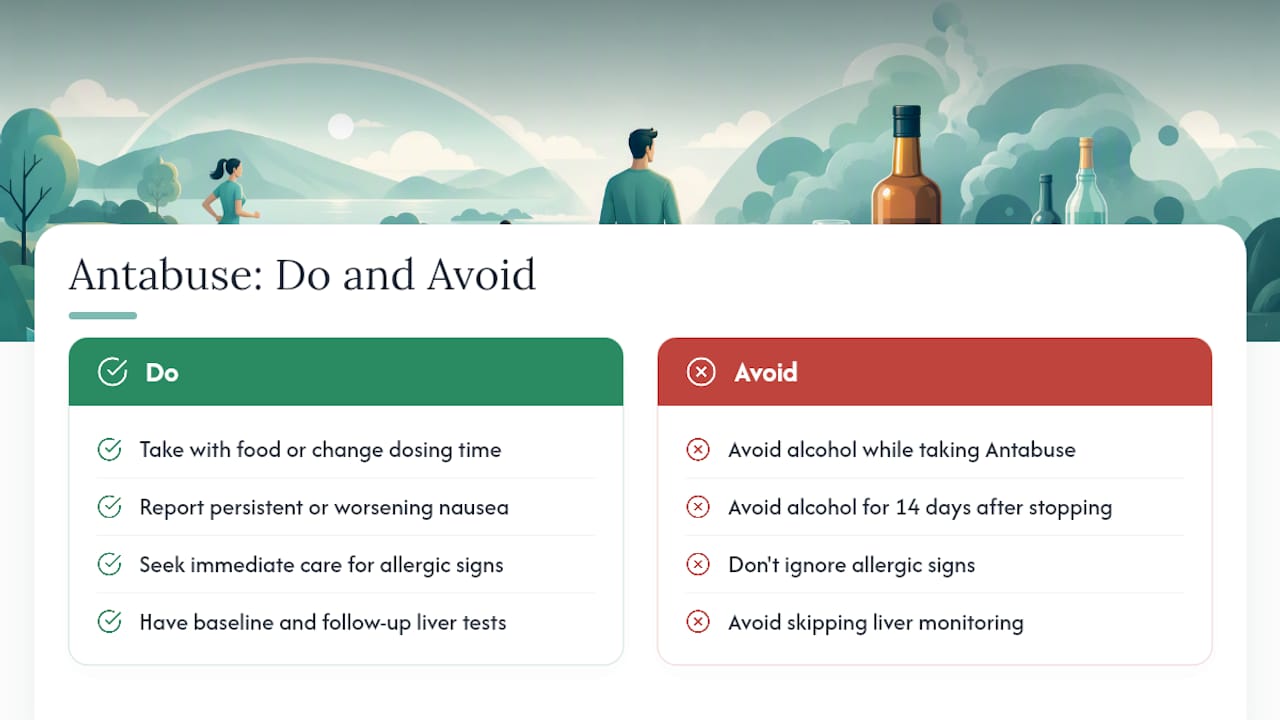
Does Antabuse cause nausea? Yes, mild nausea is one of the more common Antabuse side effects, particularly in the first couple of weeks. Taking it with food or adjusting the time of day you dose can often reduce it, but persistent or worsening nausea should be reported to your clinician.
What are the signs of an Antabuse allergy? Signs of an allergic reaction can include a spreading rash, hives, facial or throat swelling, or difficulty breathing that isn’t tied to alcohol exposure. These differ from the disulfiram-alcohol reaction and warrant immediate medical attention.
Is Antabuse safe for long-term use? Antabuse can be used long-term under medical supervision, with periodic liver monitoring and regular clinician check-ins. Long-term safety depends heavily on consistent follow-up and avoiding all alcohol sources, including hidden ones.
Can Antabuse cause liver damage even without drinking? Yes, rare hepatotoxicity has been reported in patients taking disulfiram as prescribed, without any alcohol involved, which is why baseline and follow-up liver testing matter regardless of drinking status.
How long do Antabuse side effects last after stopping the medication? Most mild side effects clear up within days to two weeks after your last dose. The disulfiram-alcohol reaction risk can persist for up to 14 days after stopping, so alcohol avoidance needs to continue through that window.
This article is general information, not a substitute for advice from a qualified doctor. Consult a qualified healthcare professional about your own circumstances before acting on anything here.
Sources
The clinical claims in this guide draw on established medical references rather than general health blogs, and it’s worth bringing these to your own clinician if you want to discuss your specific monitoring plan or risk factors.
- Disulfiram - StatPearls - NCBI Bookshelf
- ANTABUSE® (Disulfiram) package insert — DailyMed
- SAMHSA — Disulfiram (Antabuse) side effects and safety
- Incorporating Alcohol Pharmacotherapies Into Medical Practice - NCBI Bookshelf
- Cleveland Clinic — Disulfiram: Uses, Warnings & Side Effects
Recommended
- Detox Withdrawal Symptoms: What to Expect During Recovery | Connected Recovery Inc.
- Cope with Withdrawal and Anxiety: Immediate Steps and Help | Connected Recovery Inc.
- Opioid Detox Timeline: What to Expect and When to Get Help | Connected Recovery Inc.
- Medical Detox in Van Nuys, CA | Connected Recovery Inc.
DHCS Licensed · Joint Commission Accredited
If you or a loved one is struggling with substance use, our admissions team is available to verify your insurance benefits and help you begin recovery. All calls are confidential.