
Cope with Withdrawal and Anxiety: Immediate Steps and Help

If you’re feeling intense anxiety during withdrawal, the single most important thing you can do right now is move to a calm, safe space and get a medical assessment. Call 911 immediately if you or someone nearby is having a seizure, losing consciousness, or expressing thoughts of suicide.
While you wait for help or stabilize in a safe place, work through this checklist:
- Breathe slowly: Inhale for 4 counts, hold for 2, exhale for 6. Repeat until your heart rate settles.
- Move to a quiet room away from noise, bright lights, and stressful people.
- Sip water steadily. Dehydration makes anxiety and physical symptoms worse.
- Call or text a support person and ask them to stay with you.
- Call 988 (Suicide and Crisis Lifeline) if you’re having thoughts of self-harm or feel unable to cope.
- Call 911 if you have a seizure, chest pain, severe confusion, or can’t stop vomiting.
Withdrawal is medically serious for certain substances. SAMHSA’s National Helpline (1-800-662-4357) is free, confidential, and available 24/7 to connect you with treatment options.
Table of Contents
- Why withdrawal causes anxiety in your body
- Common withdrawal symptoms and when they typically peak
- Actionable strategies to lower anxiety during withdrawal
- When withdrawal symptoms become an emergency
- How medically supervised detox reduces anxiety and improves safety
- Key Takeaways
- What I’d tell you if you called us today
- Connected Recovery’s medically supervised detox for withdrawal anxiety
- Authoritative resources for further reading
Why withdrawal causes anxiety in your body
Withdrawal is your nervous system recalibrating after it has adapted to a substance. When that substance disappears, the brain’s inhibitory and excitatory systems snap out of balance, producing autonomic hyperactivity: racing heart, sweating, tremor, and intense anxiety. Clinical guidelines describe this as the body overshooting its baseline, not a sign that something has gone permanently wrong.
The specific experience depends on the substance:
- Alcohol and benzodiazepines: The highest-risk category. Both suppress the central nervous system, so stopping them abruptly causes rebound excitation that can escalate to seizures or delirium. Anxiety often feels physical and overwhelming.
- Opioids: Rarely life-threatening but intensely uncomfortable. Expect anxiety alongside muscle aches, sweating, and restlessness. Symptoms can feel like severe flu combined with panic.
- Cannabis: Generally milder. Anxiety, irritability, and sleep disruption are common, usually peaking in the first few days.
- Stimulants (cocaine, methamphetamine): The acute phase brings exhaustion and low mood; anxiety tends to emerge in the days that follow as the brain’s dopamine system slowly restores itself.
A racing heart or panic-like sensation during detox is often a sign of autonomic hyperactivity rather than a primary panic disorder. That distinction matters clinically because it changes how a doctor will treat you, which is one reason a medical assessment early in the process is worth getting.

Common withdrawal symptoms and when they typically peak
Acute withdrawal symptoms usually begin within hours to days after stopping a substance, peak within a short window, and resolve for most people within a few weeks. Some people then enter a post-acute phase where milder symptoms persist for months.
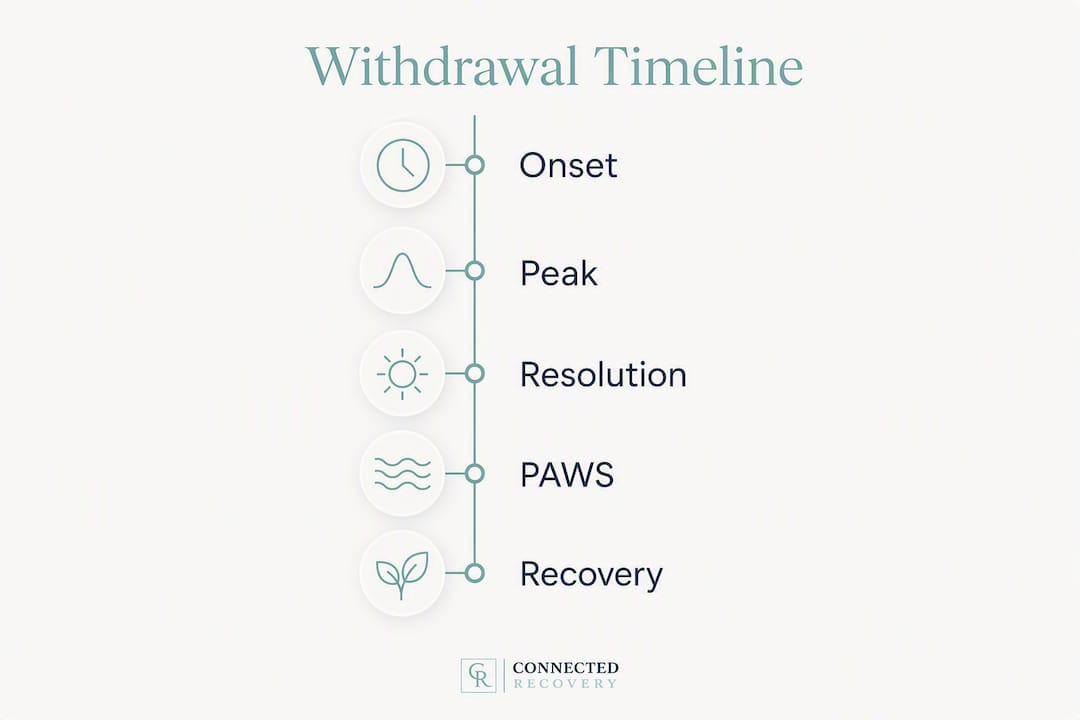
| Substance | Typical onset | Peak | Usual resolution |
|---|---|---|---|
| Alcohol | Typically begins within a day | Peaks within a few days | Usually resolves within a week (acute); longer symptoms possible |
| Benzodiazepines | Usually starts within several days | Peaks in about one to two weeks | Commonly resolves within weeks, but can last longer |
| Opioids | Onset is within hours to a day | Peaks around one to three days | Acute withdrawal commonly resolves within days to a week |
| Cannabis | 1–3 days | Days 2–6 | 1–2 weeks |
| Stimulants | Hours to 1–2 days | Days 1–3 | Acute: 1–2 weeks; protracted phase: 1–2 months |
For a fuller breakdown of what to expect at each stage, detox withdrawal symptom timelines are covered in detail by Connected Recovery’s clinical team.
Pro Tip: Post-acute withdrawal syndrome (PAWS) can produce waves of anxiety, mood swings, and sleep problems long after the acute phase ends. Stimulant and alcohol withdrawal are particularly associated with this pattern. If symptoms return or intensify weeks later, that is not a relapse in progress — it is a known physiological pattern. Understanding why PAWS can feel like it comes in waves helps you plan for it rather than be blindsided.
Actionable strategies to lower anxiety during withdrawal
The three fastest-acting tools you have right now are slow breathing, a grounding exercise, and calling someone you trust. Everything else builds on that foundation.

Immediate calming techniques
Paced breathing (4-2-6 pattern): Breathe in through your nose for 4 counts, pause for 2, breathe out through your mouth for 6. The extended exhale activates the parasympathetic nervous system and physically slows your heart rate. Do this for 5 minutes. Controlled breathing is one of the most consistently recommended techniques for reducing acute anxiety.
5-4-3-2-1 grounding: Name 5 things you can see, 4 you can touch, 3 you can hear, 2 you can smell, 1 you can taste. This interrupts the anxiety spiral by pulling attention into the present moment. It works even when cognitive function is impaired, which is common during acute withdrawal.
Distraction with low demand: Put on a familiar TV show, a podcast, or music you know well. The goal is not entertainment — it is occupying enough of your attention that the anxiety loop loses its grip.
Daily self-care that compounds over time
- Sleep: Keep a consistent wake time even when sleep is broken. Avoid screens for 30 minutes before bed. Sleep disruption is one of the most persistent withdrawal symptoms, and protecting sleep hygiene reduces next-day anxiety significantly.
- Hydration and nutrition: Aim for 2–3 liters of water daily and eat small, regular meals even when appetite is low. Blood sugar swings amplify anxiety.
- Gentle movement: A 20-minute walk outdoors lowers cortisol and improves mood without taxing a body already under stress. Avoid intense exercise in the first few days of acute withdrawal.
- Mood and medication diary: Track symptoms, sleep hours, and any medications taken. This record helps clinicians adjust your care and helps you notice when things are genuinely improving.
Clinical supports worth knowing about
Medication-assisted treatment (MAT) is a well-established option for opioid withdrawal, using medications like buprenorphine or methadone to reduce cravings and physical distress. For alcohol and benzodiazepine withdrawal, clinicians may use benzodiazepines under strict supervision to prevent seizures and manage acute anxiety. Clonidine is commonly used to reduce sweating, tremor, and tachycardia across several substance types. None of these should be self-administered. Ask your doctor or intake clinician directly: “What medications are available to help with my anxiety and physical symptoms during detox?”
Pro Tip: Prepare a comfort box before withdrawal peaks. Include a soft blanket, headphones with a calming playlist, a printed copy of your breathing instructions, a water bottle, and a short written script for your support person (“If I seem panicked, please sit with me, remind me to breathe slowly, and don’t argue with me about anything”). A pre-made self-care box prevents decision fatigue when your thinking is at its most impaired.
When withdrawal symptoms become an emergency
If you see any of the signs below, get emergency care now. Do not wait to see if they pass.
Some anxiety during withdrawal is expected and manageable. What you need to distinguish is the difference between a panic response (fast heartbeat, shallow breathing, fear) and dangerous autonomic instability. Panic is uncomfortable but not immediately life-threatening. Autonomic instability can escalate to seizure, cardiac event, or death within hours, particularly with alcohol and benzodiazepine withdrawal.
Call 911 immediately for:
- Seizure or convulsions
- Loss of consciousness or extreme confusion (delirium)
- Chest pain or irregular heartbeat that does not settle
- Inability to keep fluids down for more than 12 hours
- Very high fever (above 103°F)
- Suicidal thoughts or intent to harm yourself or others
- Severe agitation that cannot be calmed
While waiting for emergency services:
- Do not leave the person alone.
- Keep the airway clear; place them on their side if they are unconscious.
- Do not give food, water, or any medication until paramedics arrive.
- Call 988 if the crisis is psychiatric rather than physical.
Clinical observation every 3–4 hours is the standard in supervised detox settings precisely because deterioration can be rapid and subtle. At home, that level of monitoring is difficult to replicate, which is why high-risk withdrawals belong in a medical setting.
How medically supervised detox reduces anxiety and improves safety
Medically supervised detox lowers acute risk and can reduce anxiety through continuous monitoring and targeted medications that home-based withdrawal simply cannot provide. Clinical guidance is clear that during the acute withdrawal phase, the priority is safety and stabilization, not intensive therapy.
Typical clinical supports in a supervised detox include:
- MAT medications — (buprenorphine, methadone) for opioid withdrawal
“The aim of withdrawal care is to minimise the risks associated with withdrawal and to reduce discomfort. This maximises the chance of completion of withdrawal, in turn enabling people to engage in treatment that will reduce harm in the longer term.” — NSW Health, Management of Withdrawal from Alcohol and Other Drugs
One point that often surprises people: deep psychological work, including intensive CBT or trauma processing, is not appropriate during acute withdrawal. The brain is not in a state to benefit from it. Stabilization comes first. Therapy, aftercare planning, and relapse prevention work begin once the acute phase is complete and the person can genuinely engage.
Do not self-medicate with over-the-counter drugs, alcohol, or other substances to manage withdrawal anxiety. Clinicians will determine what is safe and at what dose. Self-medicating can mask warning signs and create new dependencies.
Key Takeaways
Managing withdrawal anxiety safely requires immediate calming techniques, medical assessment for high-risk substances, and a clear plan for what comes after the acute phase ends.
| Point | Details |
|---|---|
| Act immediately on red flags | Seizures, severe confusion, chest pain, or suicidal thoughts require a 911 call, not a wait-and-see approach. |
| Medical supervision reduces risk | Supervised detox provides monitoring and medications that home-based withdrawal cannot safely replicate for alcohol, benzodiazepines, or opioids. |
| Symptoms follow predictable timelines | Acute withdrawal peaks within days to weeks; PAWS can extend symptoms for months and needs professional guidance to manage. |
| Breathing and grounding work now | Paced breathing (4-2-6) and 5-4-3-2-1 grounding are clinically supported tools you can use in the moment, without any equipment. |
| Connected Recovery | Connected Recovery offers 24/7 medically supervised detox, dual-diagnosis care, and aftercare planning at its 12-bed facility in Van Nuys, Los Angeles. |
What I’d tell you if you called us today
Anxiety during withdrawal is not a character flaw or a sign that recovery is failing. It is your nervous system doing exactly what physiology predicts it will do when a substance it has adapted to is removed. That does not make it less frightening, but it does mean it is treatable and temporary.
If someone called our intake line right now describing intense anxiety, shaking, and an inability to sleep after stopping alcohol or opioids, the first thing I would do is ask about their physical safety: any seizures, any chest pain, any thoughts of self-harm. Those answers determine whether the next step is 911 or a clinical assessment with us. Most people are somewhere in the middle: genuinely suffering, not yet in danger, and needing more support than they can get alone.
What I have seen consistently is that people who get into a structured, supervised environment early spend less time in acute distress. The medications work faster when they are started at the right time. The anxiety becomes manageable rather than consuming.
If you are unsure whether what you are experiencing warrants medical attention, assume it does. A clinical assessment costs you nothing but time. Going without one when you needed it costs far more.
This article provides general information, not medical advice. Please consult a qualified healthcare professional or contact emergency services for guidance specific to your situation.
Connected Recovery’s medically supervised detox for withdrawal anxiety
Withdrawal anxiety is one of the most common reasons people reach out to Connected Recovery. The facility’s 12-bed structure in Van Nuys, Los Angeles means every person admitted gets direct clinical attention, not a bed in a crowded unit where symptoms can go unnoticed.
What Connected Recovery offers that directly addresses withdrawal anxiety:
- Medical detox with 24/7 supervision: Vital signs monitored around the clock, with medications adjusted in real time as symptoms change.
- Dual-diagnosis care: If anxiety persists beyond the acute phase, the clinical team can assess whether a co-occurring disorder needs treatment alongside the substance use.
- Medication-assisted treatment: MAT options for opioid use disorder, integrated into the broader treatment plan.
- Relapse prevention planning and aftercare: Discharge planning begins early, so there is a clear next step before the acute phase ends.
Most major insurance plans are accepted. To find out whether your coverage applies and what a clinical assessment would involve, call Connected Recovery’s intake team directly or visit the medical detox program page to request a confidential consultation. Results cannot be guaranteed, but the clinical team will give you an honest picture of what supervised detox can and cannot do for your situation.
Authoritative resources for further reading
- SAMHSA National Helpline: Free, confidential, 24/7 treatment referral and information service (1-800-662-4357). Use this to find local detox and treatment programs and to check insurance options.
- NIDA (National Institute on Drug Abuse): Research-based information on substance use disorders, withdrawal, and treatment approaches.
- NCBI: Opioid Withdrawal — StatPearls: Detailed clinical overview of opioid withdrawal syndrome, symptoms, and management options.
Recommended
DHCS Licensed · Joint Commission Accredited
If you or a loved one is struggling with substance use, our admissions team is available to verify your insurance benefits and help you begin recovery. All calls are confidential.