
Blog
Methamphetamine Withdrawal Symptoms: Timeline and When to Seek Help
Methamphetamine Withdrawal Symptoms: Timeline and When to Seek Help

Methamphetamine withdrawal usually means a hard physical crash first, then days of intense cravings, low mood, and irritability that peak within the first week or two. It rarely turns physically dangerous on its own, but the psychiatric fallout, particularly suicidal thinking or psychosis, can be. Seek emergency care immediately for suicidal ideation, uncontrolled psychosis, seizures, chest pain, or an inability to eat or drink.
TL;DR:
- The first two weeks of withdrawal involve intense physical fatigue, increased appetite, and mood swings, with the highest relapse risk during the early crash and acute phases.
- Psychological symptoms like depression, anhedonia, and cravings can persist for several weeks to months beyond physical recovery, increasing the relapse risk.
- Severe psychiatric symptoms such as suicidal thoughts or psychosis require immediate emergency medical care; supportive care and behavioral therapy are crucial for recovery.
- No FDA-approved medications exist for meth withdrawal, but supportive care and behavioral treatments like CBT and contingency management are the main effective approaches.
- Factors like usage pattern, route of administration, duration of use, and co-occurring mental health conditions significantly influence withdrawal severity and duration.
Table of Contents
- What Are the Common Meth Withdrawal Symptoms?
- How Long Does Meth Withdrawal Last?
- When Should You Seek Emergency or Medical Help?
- What Treatments Actually Help With Meth Withdrawal?
- What Does Recovery Look Like After Withdrawal?
- When Does Meth Withdrawal Need Medical Supervision?
- Does Meth Withdrawal Look Different for Everyone?
- The Real Gap in How Meth Withdrawal Gets Talked About
- Sources
- FAQ
What Are the Common Meth Withdrawal Symptoms?
Meth withdrawal splits into two categories, and knowing the difference helps you figure out what’s normal and what needs a phone call to a doctor.
The physical side hits first and hardest. Expect:
- Severe fatigue and exhaustion
- Hypersomnia (sleeping 12 hours or more at a stretch)
- A sharp increase in appetite after weeks or months of suppressed hunger
- Headaches and generalized body aches
- Dry mouth and disrupted sleep once the initial crash passes
- Slowed movement and reflexes
The psychological symptoms are usually what drive someone back to the drug. They tend to run deeper and longer than the physical ones:
- Depression, sometimes severe
- Anhedonia, the flattened inability to feel pleasure in anything
- Intense, intrusive drug cravings
- Irritability and agitation
- Anxiety
- Paranoia
- Hallucinations or full psychotic episodes in a subset of users
Anhedonia deserves particular attention. It’s not ordinary sadness. It’s a gray, joyless state where food, music, sex, and relationships all feel equally flat, and it’s one of the biggest reasons people relapse in week three or four, long after the physical crash has resolved.
Withdrawal is the norm, not the exception. A clinical review of psychostimulant withdrawal found that most people who stop prolonged methamphetamine or other psychostimulant use go through a withdrawal syndrome, with severity shaped by dose, frequency of use, and whether they’ve been through withdrawal before.
How Long Does Meth Withdrawal Last?
The methamphetamine withdrawal timeline moves in three distinct stages, and each one has a different symptom profile.
- The crash (hours 1 to 72). This is the body demanding repayment for days or weeks of forced wakefulness. Deep, extended sleep is typical, followed by a surge of appetite and volatile mood swings on waking. This early window is also one of the highest-risk periods for relapse, since the discomfort is acute and a hit feels like instant relief.
- The acute phase (roughly days 4 through 10). Cravings, dysphoria, and sleep disturbance peak here. Clinical timeline data puts the acute phase at 7 to 10 days, with symptom intensity front-loaded early in that window.
- The subacute, or protracted, phase (weeks 2 through roughly 6, sometimes longer). Physical symptoms fade, but anhedonia and intermittent cravings can linger for weeks to months. A controlled inpatient study found depressive and psychotic symptoms largely resolved within a week, while craving itself persisted for at least five weeks.
That gap between “the crash is over” and “the cravings are gone” is where a lot of people get into trouble. Feeling physically normal again doesn’t mean the risk has passed.
When Should You Seek Emergency or Medical Help?
Some withdrawal symptoms are uncomfortable but manageable at home. Others are medical emergencies. Know the difference before you need it.
Call 911 or go to an emergency room immediately for:
- Active suicidal thoughts or a suicide plan
- Violent or uncontrolled psychosis
- Seizures
- Chest pain
- Severe dehydration or an inability to eat, drink, or care for yourself
Medically supervised detox or inpatient care is worth strongly considering if there’s a history of psychosis, a co-occurring mental illness, a past withdrawal that turned severe, or no safe, supported place to recover. SAMHSA’s national helpline and treatment locator and Findtreatment are both solid starting points for locating licensed detox and treatment programs, and Connected Recovery’s detox withdrawal guidance walks through what a safety plan for detox should include before symptoms even start.
What Treatments Actually Help With Meth Withdrawal?
There’s no FDA-approved medication that cures methamphetamine withdrawal, and any guide that implies otherwise is oversimplifying. What exists is a mix of supportive care, behavioral treatment, and a handful of medications with mixed, early-stage evidence.
Supportive care does most of the heavy lifting in the first two weeks: consistent sleep, regular meals, hydration, light exercise, and a structured daily routine that fills the hours cravings used to occupy. A written crisis plan, done before symptoms hit, matters more than people expect.
Behavioral approaches carry the strongest evidence:
- Cognitive behavioral therapy (CBT)
- Contingency management, which rewards verified abstinence
- Mindfulness-based relapse prevention
- Structured exercise programs
- Repetitive transcranial magnetic stimulation (rTMS), where accessible
On the medication side, a review of clinical evidence and guidelines found no single pharmacotherapy that reliably treats meth withdrawal. Small trials suggest possible, inconsistent benefit from mirtazapine, bupropion, and modafinil, and some early research on agents like pexacerfont and buprenorphine has shown mixed results at best. Benzodiazepines and antipsychotics have a real, narrow role, but only under medical supervision for severe agitation or active psychosis, not for routine symptom relief.
Pro Tip: When a craving hits, try urge surfing: name it, set a mental timer for 15 minutes, and do something physical (a walk, a shower, pushups) until it passes. Cravings are intense but time-limited. Pair that tactic with a support call, a sponsor, a friend, a family member, anyone who can talk you through the 15 minutes without judgment.
What Does Recovery Look Like After Withdrawal?
Most people notice significant improvement in symptoms by two to three months after cessation. Sleep patterns normalize, mood improves, and cognitive fog recedes. However, symptoms like anhedonia and occasional cravings may persist beyond the acute withdrawal period for several months, which can contribute to relapse risk.
The main relapse drivers are predictable: anhedonia (nothing feels good yet, so old habits feel like the only relief), cue reactivity (a place, a person, a smell that used to signal drug use), and plain stress. Each has a specific counter. Anhedonia responds to scheduled, low-stakes pleasant activities and, when needed, ongoing psychiatric care for underlying mood disorders. Cue reactivity responds to deliberately avoiding known triggers early on and building new routines around new locations. Stress responds to exercise, sleep regulation, and therapy that teaches concrete coping skills rather than just insight.
Practical early aftercare steps that lower relapse risk:
- Enroll in outpatient therapy or an intensive outpatient program (IOP)
- Use contingency management programs where available
- Join a peer support group
- Keep a consistent exercise and sleep schedule
- Continue psychiatric treatment for any co-occurring depression or anxiety
Connected Recovery’s meth addiction treatment program covers exactly this window, the weeks after detox when structure matters more than motivation.
When Does Meth Withdrawal Need Medical Supervision?
Unsupervised withdrawal works for some people. It’s genuinely risky for others, and the difference usually comes down to psychiatric severity, not willpower.
Twenty-four hour medical supervision provides three things a home environment can’t: continuous monitoring for suicidal ideation or psychotic escalation, medication management when agitation or psychosis needs pharmacological intervention, and immediate crisis response if things turn acute overnight.
Some treatment centers run boutique residential models built around that level of attention, with 24/7 medical supervision, tailored treatment plans, dual diagnosis care for co-occurring mental health conditions, and aftercare planning that starts before detox even ends. If you’re weighing whether you need that level of care, consider three questions honestly: How severe are the psychiatric symptoms? Has withdrawal gone badly before? Is home actually safe and supported right now? Insurance and payment options are worth confirming directly with a facility before admission.
Does Meth Withdrawal Look Different for Everyone?
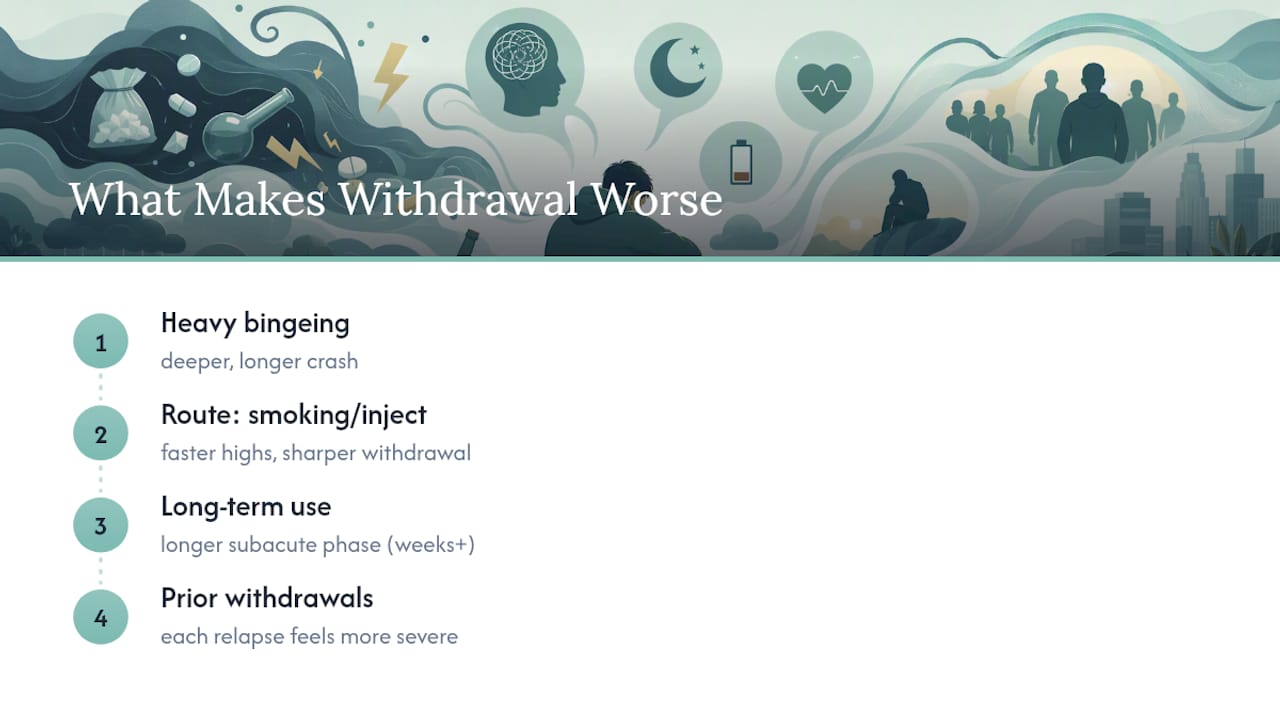
It does, and usage pattern is the biggest variable. Someone who binged heavily for days on end, common with smoked or injected methamphetamine, tends to hit a deeper, longer crash than someone using smaller amounts less frequently. Route of use matters too: smoking and injecting produce faster, more intense highs and, generally, sharper withdrawal on the other side compared to oral or intranasal use.
Duration of use compounds the effect. Someone with a multi-year history of daily use is more likely to face a longer subacute phase, with anhedonia and cravings dragging past the six-week mark, than someone whose use was measured in months. Prior withdrawal episodes raise the bar again. Each time someone withdraws and relapses, the next withdrawal tends to feel more severe, a pattern sometimes described as kindling.
Individual factors layer on top of all this. Co-occurring depression, anxiety, or a history of psychosis makes the psychological symptoms hit harder and last longer. Age, general physical health, nutritional status going into detox, and whether other substances (alcohol, opioids, benzodiazepines) are involved all shift the picture. Someone withdrawing from meth alone has a more predictable course than someone managing polysubstance withdrawal, which is one more reason self-assessment only goes so far, and why a proper clinical evaluation catches risks a symptom checklist can’t.
The Real Gap in How Meth Withdrawal Gets Talked About
Most advice on meth withdrawal treats it like a week-long ordeal you white-knuckle through. That framing undersells the actual danger window. The physical crash is loud and miserable, but it’s also short and self-limited. The quieter phase, weeks two through six, when anhedonia sets in and everyone around you assumes you’re “through the worst of it,” is where relapse actually happens.
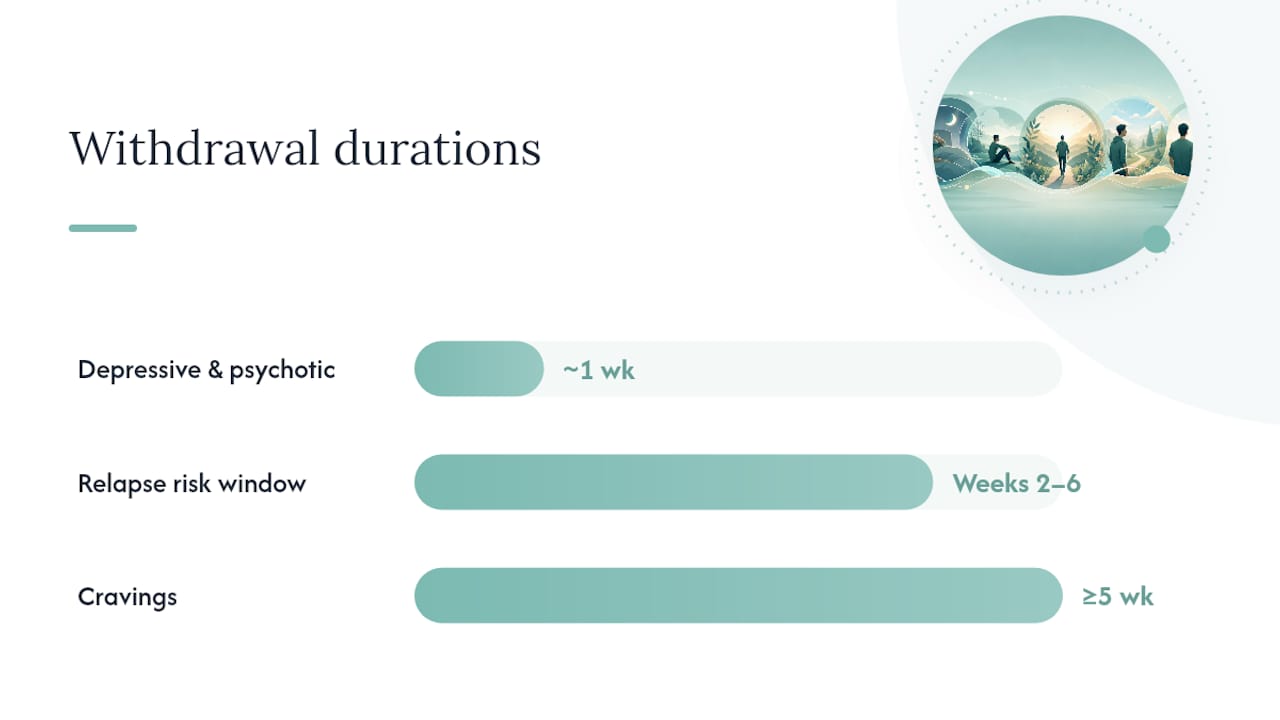
The evidence backs this up directly: depressive and psychotic symptoms resolve within about a week, but cravings persist for five weeks or longer. That’s not a footnote. That’s the entire relapse-prevention problem in one sentence.
If there’s one thing worth prioritizing, it’s this: don’t treat “feeling physically normal” as the finish line. Line up outpatient therapy, contingency management, or a peer support group before the crash even ends, not after cravings resurface. And if psychiatric symptoms, prior severe withdrawal, or an unsafe home environment are in the picture, medically supervised detox isn’t overkill. It’s the appropriate level of care for a condition that’s more psychologically dangerous than most people assume.
— Jim
This article is general information, not a substitute for advice from a qualified doctor. Consult a qualified healthcare professional about your own circumstances before acting on anything here.
Sources
- Clinical Management of Psychostimulant Withdrawal: Review of the Evidence - PMC
- Management of Acute Withdrawal and Detoxification for Adults who Misuse Methamphetamine: A Review of the Clinical Evidence and Guidelines - NCBI Bookshelf
FAQ
What Are the Main Withdrawal Symptoms From Meth?
The core symptoms are severe fatigue, hypersomnia, increased appetite, depression, anhedonia, intense cravings, and irritability, with paranoia or psychosis possible in more severe cases.
What Is Used to Treat Methamphetamine Withdrawal?
No medication is FDA-approved specifically for meth withdrawal. Care relies on supportive measures like sleep, nutrition, and structure, plus behavioral treatments such as CBT and contingency management; some small trials suggest possible benefit from mirtazapine, bupropion, or modafinil.
How Long Does Meth Withdrawal Last?
The acute phase typically lasts 7 to 10 days, with depressive and psychotic symptoms usually resolving within about a week. Cravings and low-level mood symptoms can persist for five weeks or longer.
What Are the First Symptoms of Meth Withdrawal?
The first 24 to 72 hours usually bring an intense crash: extended sleep, a sharp rise in appetite, and volatile mood swings once the person wakes.
Is Meth Withdrawal Dangerous?
It’s rarely physically life-threatening, but severe psychiatric symptoms like suicidal ideation or psychosis can be, which is why emergency or medically supervised care matters when those symptoms appear.
Recommended
DHCS Licensed · Joint Commission Accredited
If you or a loved one is struggling with substance use, our admissions team is available to verify your insurance benefits and help you begin recovery. All calls are confidential.