
Blog
1–14 Day Phone Hold: Rehab Cell Phone Policy and How to Prepare
1–14 Day Phone Hold: Rehab Cell Phone Policy and How to Prepare

Most residential programs restrict phone use at admission and allow limited, supervised contact once you’re stabilized. There’s no single “rehab cell phone policy” that applies everywhere; each facility sets its own rules, and rules typically vary based on your level of care. Expect an intake hold, usually one to fourteen days, followed by staged phone privileges tied to clinical progress. Before you check in, notify key contacts, set bills to autopay, and write down important phone numbers on paper.
TL;DR:
- Most programs impose an intake hold of one to fourteen days before allowing any phone access, with restrictions gradually easing based on recovery progress.
- Facilities typically conduct a security check of devices at intake, removing chargers and cases, and prohibiting recording, photography, and social media posting to protect privacy.
- Scheduled family calls usually occur a few times weekly with set time limits, and in-person contact often shifts to written letters or supervised phone-in visits.
- Preparing for rehab involves setting up autopay, writing important contacts on paper, and organizing offline media, since internet and streaming are often restricted.
- Privacy laws like HIPAA protect client information, and facilities tailor communication plans individually, balancing safety concerns with personal connection needs.
Table of Contents
- What Does the Typical Rehab Cell Phone Policy Look Like?
- Why Do Rehab Centers Restrict Cell Phones?
- How Do Facilities Handle Phones at Intake?
- How Do Phone Calls and Family Contact Work?
- How Should You Prepare Before Admission?
- What Are the Privacy and HIPAA Rules Around Phones?
- A Provider’s View on Phones and Focused Care
- Where Connected Recovery Fits If You’re Weighing Your Options
- Where to Learn More
- Sources
- FAQ
What Does the Typical Rehab Cell Phone Policy Look Like?
Two broad models exist. Some centers run device-free, treating early treatment as a complete break from outside noise. Others take a more flexible, technology-friendly approach, giving clients supervised access from the start and loosening restrictions as trust builds. Neither model is universally “correct.” The right one depends on your history, your clinical needs, and the intensity of the program you enter.
Within either model, a few patterns show up again and again:
- An intake hold lasting anywhere from one to fourteen days, with most programs restricting phones for the first one to two weeks
- Scheduled daily or weekly phone windows once the hold lifts, typically limited to short durations
- Supervised use in a common area rather than private, unmonitored access
- A blanket ban on recording, photography, and social media posting
- Limited or filtered internet access, sometimes routed through a shared facility device instead of a personal one
If you’re wondering whether you can use your phone in rehab at all, the honest answer is: eventually, in most programs, but almost never on day one.
Why Do Rehab Centers Restrict Cell Phones?
The restriction isn’t arbitrary. Phones are direct lines back to the exact stressors treatment is designed to interrupt: a dealer’s number, a toxic ex, a boss emailing about deadlines, or a social feed engineered to trigger comparison and anxiety. Facility technology policies exist because removing that access helps create a container for early healing, not because staff enjoy taking devices away.
Pro Tip: Think of the phone hold less like a punishment and more like a splint. You wouldn’t remove a cast three days after setting a broken bone just because it’s inconvenient.
Peer-reviewed research on treatment engagement shows that limiting environmental triggers and outside distractions supports higher retention rates during early stabilization, when dropout risk is highest. SAMHSA reinforces this same principle across behavioral health settings: the fewer competing demands on a person’s attention in week one, the more bandwidth they have for actual therapeutic work. Constant connectivity, particularly social media, has its own documented links to mood disruption, which only compounds the problem during acute stabilization.
How Do Facilities Handle Phones at Intake?
Walk into most residential programs and your phone comes up almost immediately during intake. Staff typically inspect the device, remove chargers and cases (sometimes used to conceal contraband), and place it in secure, labeled storage until your program’s policy allows its return.
This isn’t just about the phone itself. Intake staff are also checking for:
- Hidden recording devices or compartments built into cases
- Unauthorized electronics that could bypass facility monitoring
- Anything that could compromise another client’s privacy or your own safety
Urgent situations get handled differently. If there’s a genuine emergency, staff act as the go-between, relaying messages or connecting you through a monitored line rather than handing back your personal device.
Pro Tip: Ask admissions directly what their exception process looks like before you arrive. A five-minute phone call now saves a frustrating conversation on day one.
How Do Phone Calls and Family Contact Work?
Family contact doesn’t disappear, it just moves onto a schedule. Here’s what that usually looks like:
- Approved contact lists get set during intake, often reviewed with your treatment team so calls support recovery rather than derail it.
- Scheduled calls run on a set cadence, commonly a few times a week, with time limits enforced by staff.
- Family therapy sessions, held by phone or video where the program allows it, replace casual daily check-ins with structured, therapeutic conversation.
- Letters and facility landlines fill the gaps, especially early on when personal devices stay locked away.
Set expectations with your family before admission. A short conversation about how often you’ll realistically connect prevents a lot of anxious guessing on both ends.
How Should You Prepare Before Admission?
The single biggest mistake people make before entering treatment is assuming they’ll “figure it out from inside.” You won’t have the phone to figure it out with, so handle the logistics now.
- Set autopay on rent, utilities, and any recurring bills
- Write an out-of-office message and, if appropriate, loop in your employer or HR
- Designate one family member as your point person for outside updates
- Write down important phone numbers on paper. Most guidance on preparing for rehab specifically recommends a written contact list since you can’t rely on your phone’s saved contacts
- Download any offline music, audiobooks, or media the facility permits, since streaming access is often restricted
- Check the facility’s specific bring/leave list rather than assuming standard packing rules apply
Pro Tip: Clinicians consistently point to autopay and out-of-office messages as the two smallest efforts with the biggest payoff, they prevent the kind of avoidable crisis that pulls your attention right back to the outside world. Connected Recovery’s guide to confidential admission steps walks through this preparation in more detail. For more on how staged communication continues after discharge, see how facilities approach aftercare planning.
What Are the Privacy and HIPAA Rules Around Phones?
Recording, photographing, or posting about other clients is prohibited at nearly every facility, full stop. It’s not just policy caution, it’s protecting people at one of the most vulnerable points in their lives. Group therapy only works if everyone in the room trusts that what’s said stays there.
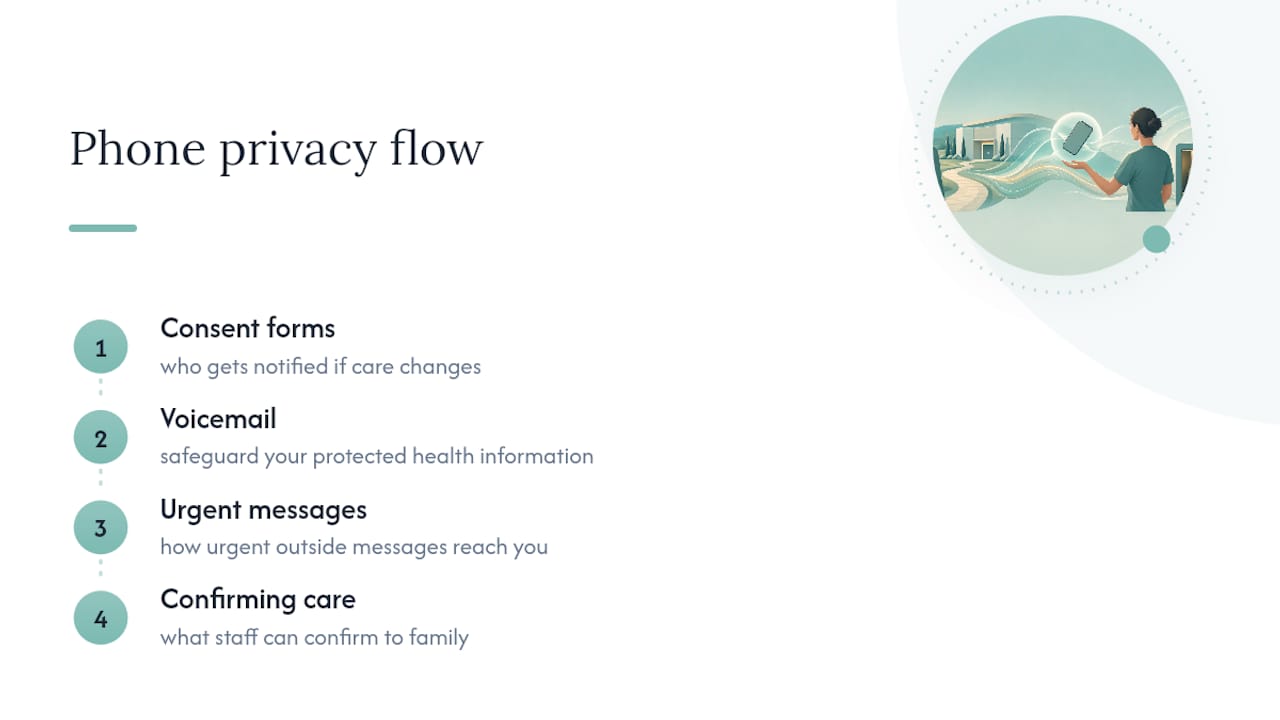
On the legal side, HIPAA requires facilities to safeguard your protected health information, which shapes how staff handle everything from voicemail messages to what they can confirm to a family member calling to check on you. Ask admissions directly about their consent forms: who gets notified if there’s a change in your care, and how urgent outside messages actually reach you. A program that protects your privacy well is also one that protects your professional reputation while you’re in treatment.
A Provider’s View on Phones and Focused Care
Restricting phones isn’t about control. It’s about protecting the narrow window where stabilization actually takes hold. Staff still make room for urgent calls and family involvement, just through scheduled, supervised channels instead of an unlocked phone in someone’s pocket. At Connected Recovery, that balance gets handled individually. A 12-bed facility can build a communication plan around one person instead of applying the same blanket rule to fifty.
— Jim
Where Connected Recovery Fits If You’re Weighing Your Options
If privacy and individualized attention matter to you, that preference should extend to how a facility handles your phone and your information, not just your treatment plan. Connected Recovery runs a boutique, 12-bed facility in Van Nuys offering medical detox, residential treatment, and dual diagnosis care for co-occurring mental health conditions, all under 24/7 medical supervision.
Because the census stays small, communication plans get built around your actual situation rather than a one-size-fits-all schedule. Staff coordinate family contact windows, protect your privacy in line with HIPAA obligations, and carry that same individualized approach into relapse prevention and aftercare planning once you’re ready to leave. If you’re comparing programs and phone policy is part of your decision, reach out to admissions at your chosen facility and ask how communication is structured for individual situations.
Where to Learn More
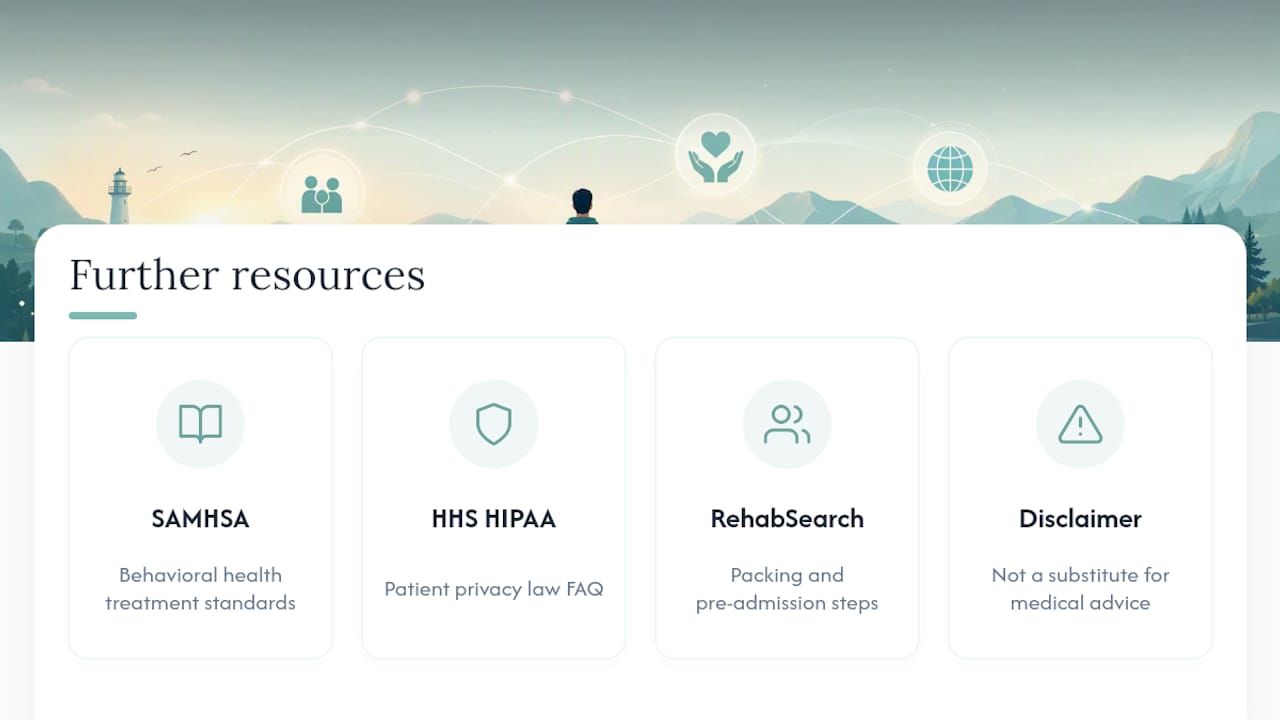
For deeper reading beyond this guide, SAMHSA offers broad guidance on behavioral health treatment standards, HHS’s HIPAA FAQ covers patient privacy law directly, and RehabSearch’s preparation guide breaks down practical packing and pre-admission steps.
This article is general information, not a substitute for advice from a qualified doctor. Consult a qualified healthcare professional about your own circumstances before acting on anything here.
Sources
- Can I use my phone in treatment? A guide to facility technology policies | Treatment Association
- SAMHSA
- HHS — HIPAA for professionals — FAQ
- Preparing for Rehab: What to Bring, Expect & Do Before Treatment | RehabSearch
- Peer-reviewed articles on treatment engagement and retention (PMC)
FAQ
How Do Phone Calls Work in Rehab?
Most programs schedule calls after an initial intake hold, often a few times weekly at set times, with staff supervising duration and, in some cases, approving who you can call in advance.
Can I Refuse to Use My Personal Cell Phone for Treatment Communication?
Yes. Facilities that provide monitored phone kiosks or landlines let you handle approved calls through shared devices, so you’re never required to hand over or rely on your personal phone.
What Are Some Simple Cell Phone Rules Rehab Facilities Use?
Common rules include no recording or photographing other clients, no social media posting, no unsupervised phone use during therapy or group sessions, scheduled call windows only, staff-approved contact lists, secure storage during intake, and staged privileges tied to clinical progress.
Can You Have Your Phone in Inpatient Mental Health Treatment?
It depends on the facility and your clinical needs; many inpatient mental health programs follow a similar model to residential addiction treatment, with an initial hold followed by supervised, scheduled access as your care team determines it’s appropriate.
Recommended
DHCS Licensed · Joint Commission Accredited
If you or a loved one is struggling with substance use, our admissions team is available to verify your insurance benefits and help you begin recovery. All calls are confidential.